Designing towards absence
Designing the moment a phone gets put down,
and the device that takes over.
Restful Escape for Hatch Sleep via Redscout
UX direction lead · Mobile + connected hardware
Summary
Description
A redesign of a connected sleep device and its companion app, structured around the daily transitions that hardware can hold better than any screen: winding down, falling asleep, and waking up.
The Problem
Engagement was healthy. The trouble was that every minute spent in the app was a minute the brand was selling people out of.
My Role
UX/UI design strategy lead, brought in through Redscout for Hatch's brand and product refresh. Mobile app + connected hardware, working alongside Hatch's product, hardware, and engineering teams. ~4 months from strategy through shipped direction.
Clients
Hatch Sleep, the connected sleep brand whose Restore device sits on millions of bedside tables. Strategy shipped as Restore 3.
Outcome
The problem: a sleep app competing with sleep.
Hatch's hardware could shape an entire bedtime environment, light, sound, gradients no phone could match. The app, though, was structured like every other wellness app: five taps to start a sound bath, five more to pair it with the right light. Each tap was a small re-engagement with the device the brand was supposedly helping the user stop using.
How do you design restful escape, a screen-based product whose job is to make you stop staring at it?
The user and the market.
The bedtime user
It is 10:47pm. The phone is on, the bedside lamp too bright, one more decision between this person and sleep.
"By the time I've set everything up, I'm awake again."
The user had not come for control. They had come to be carried.
Hatch as a brand in a saturated wellness market
Calm, Headspace, Oura, every wearable. Most competed on features and content depth. Hatch's distinction was physical: a device producing a full-room ambient experience no phone could replicate. Would the app amplify that, or dilute it?
Design Executions
Reorganizing around daily moments
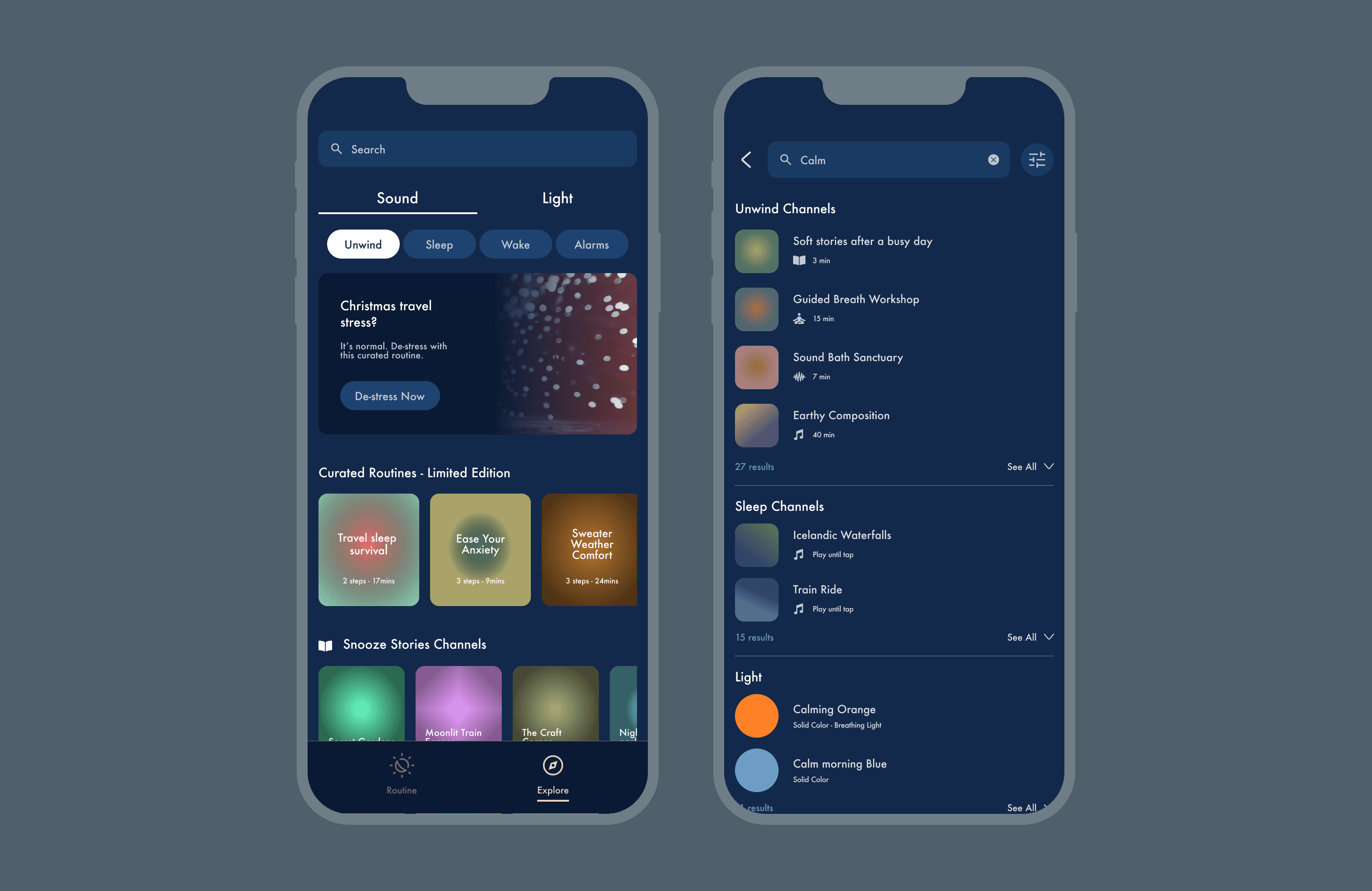
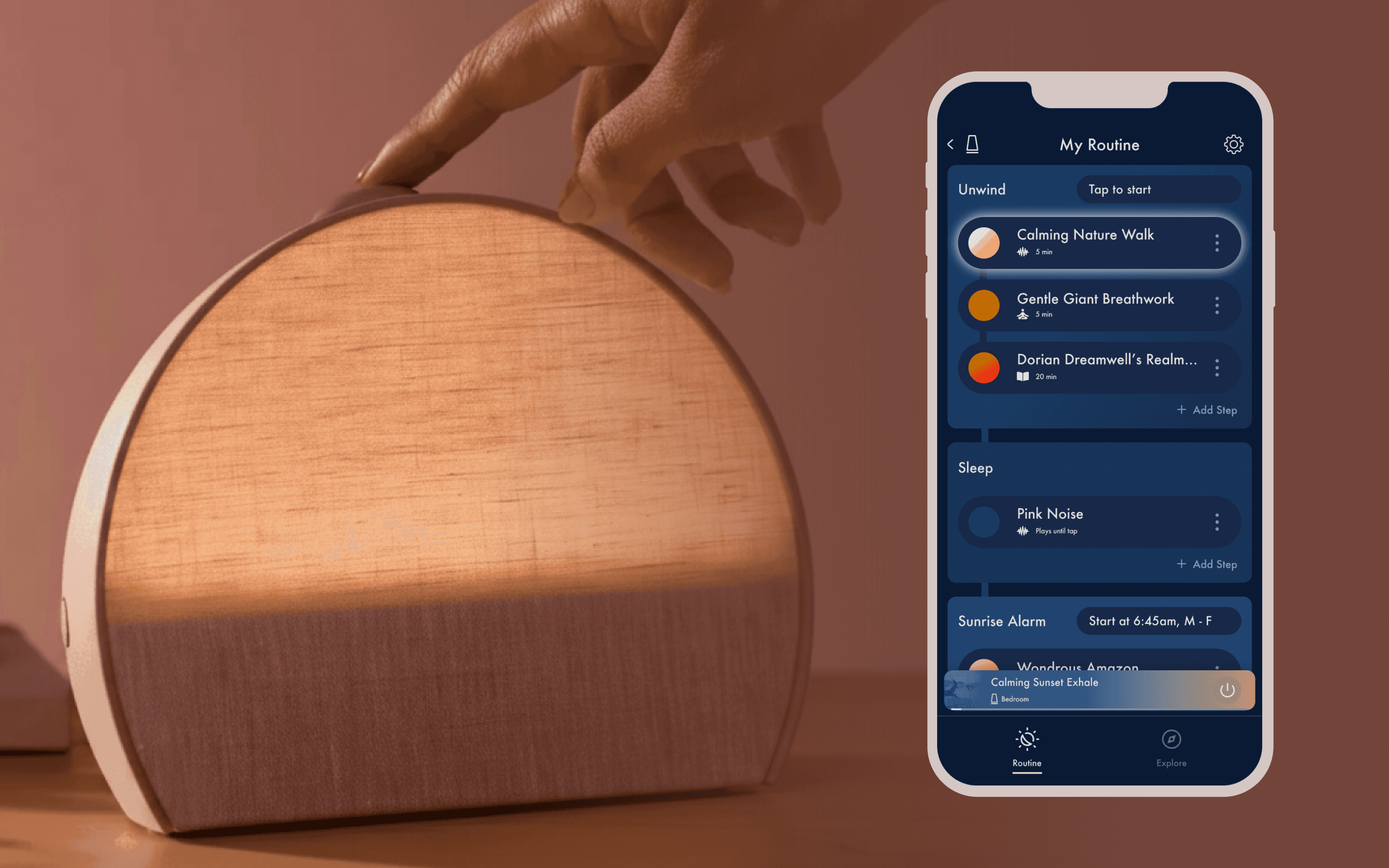
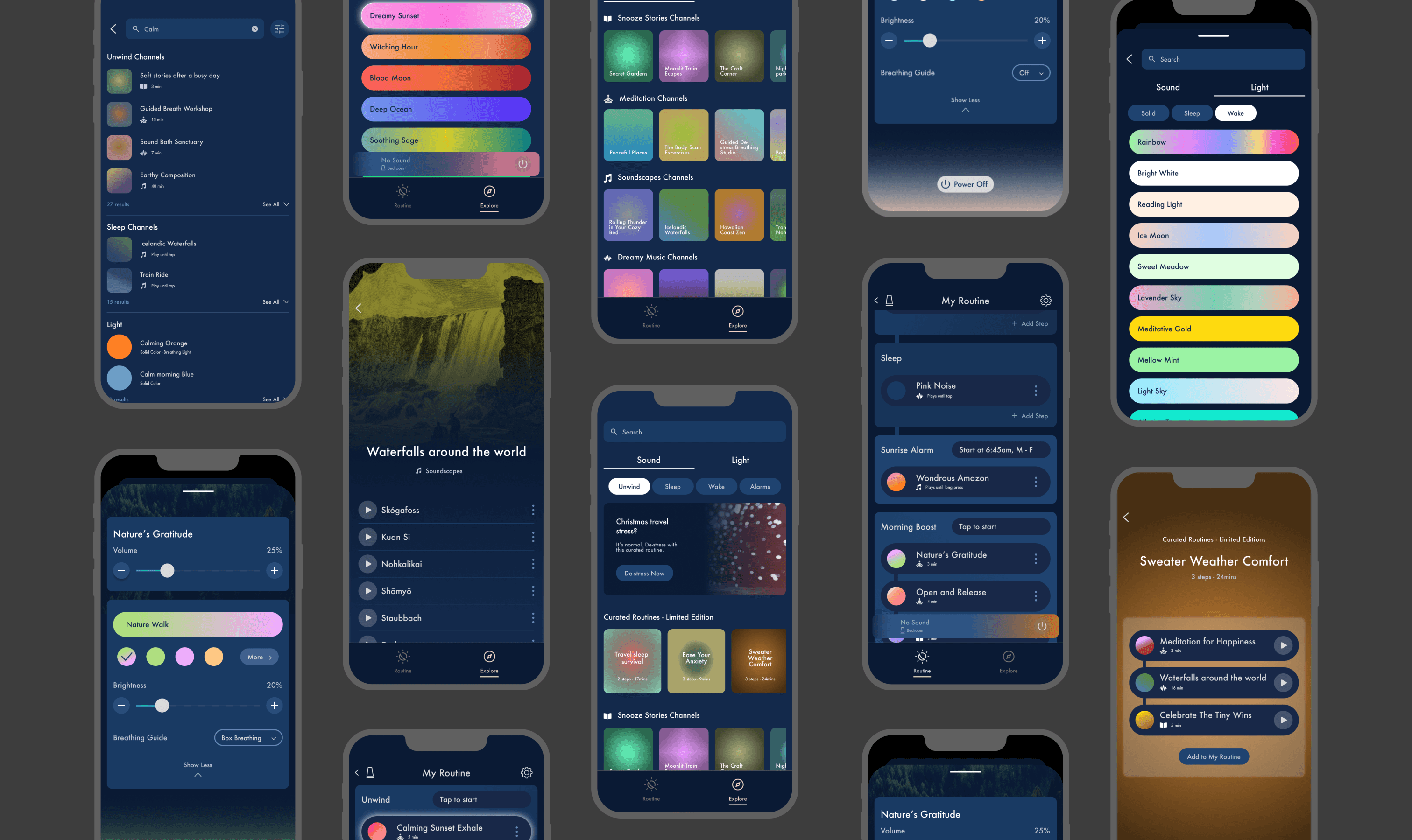
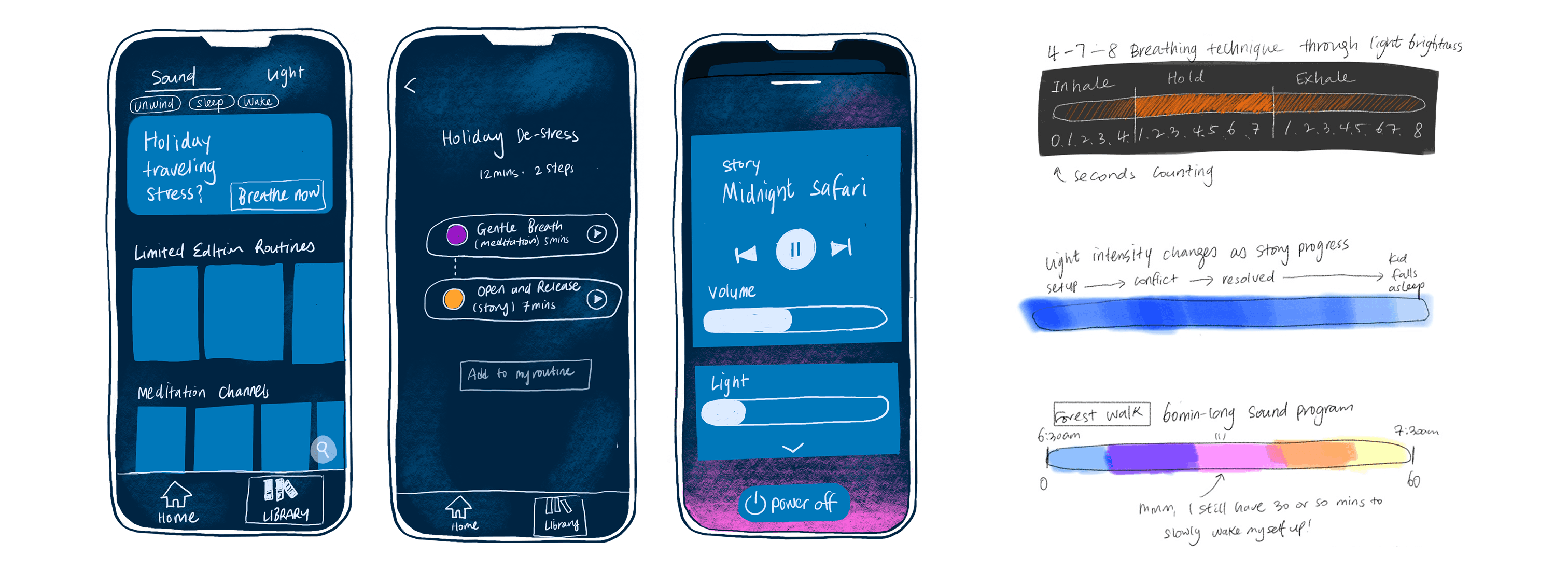
Content grouped by daily moments - unwind, sleep, and wake.
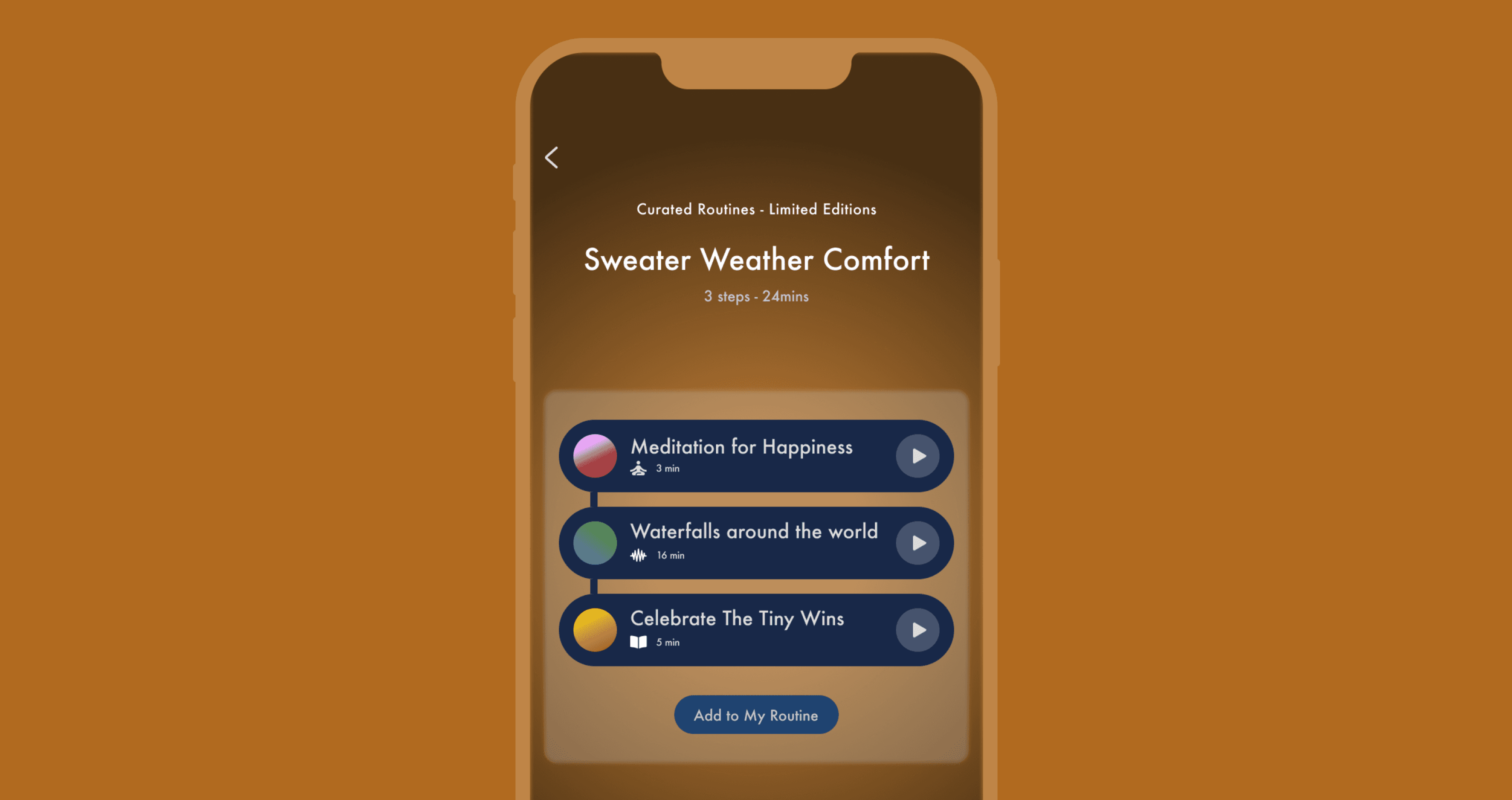
Limited edition seasonal content offered in group format.
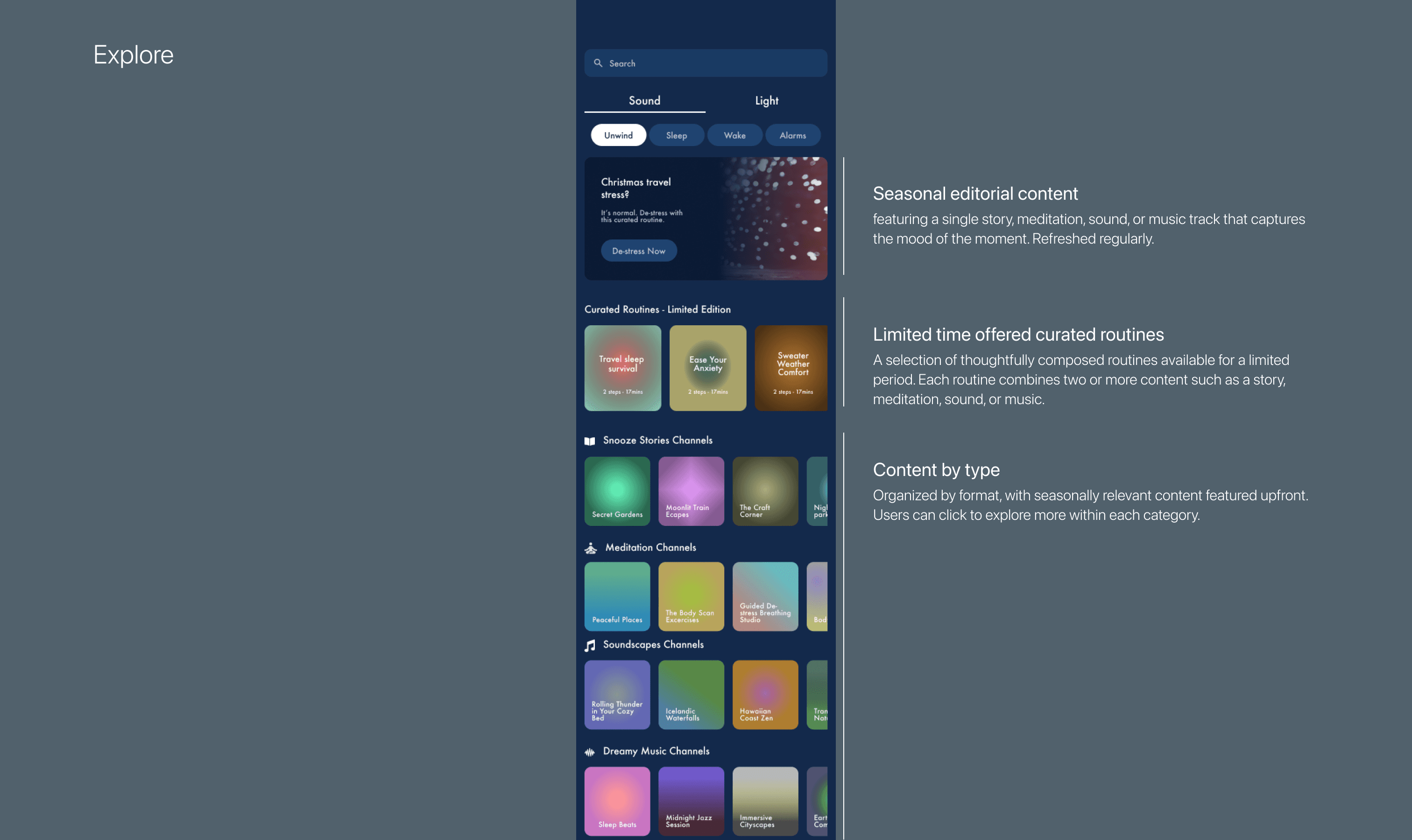
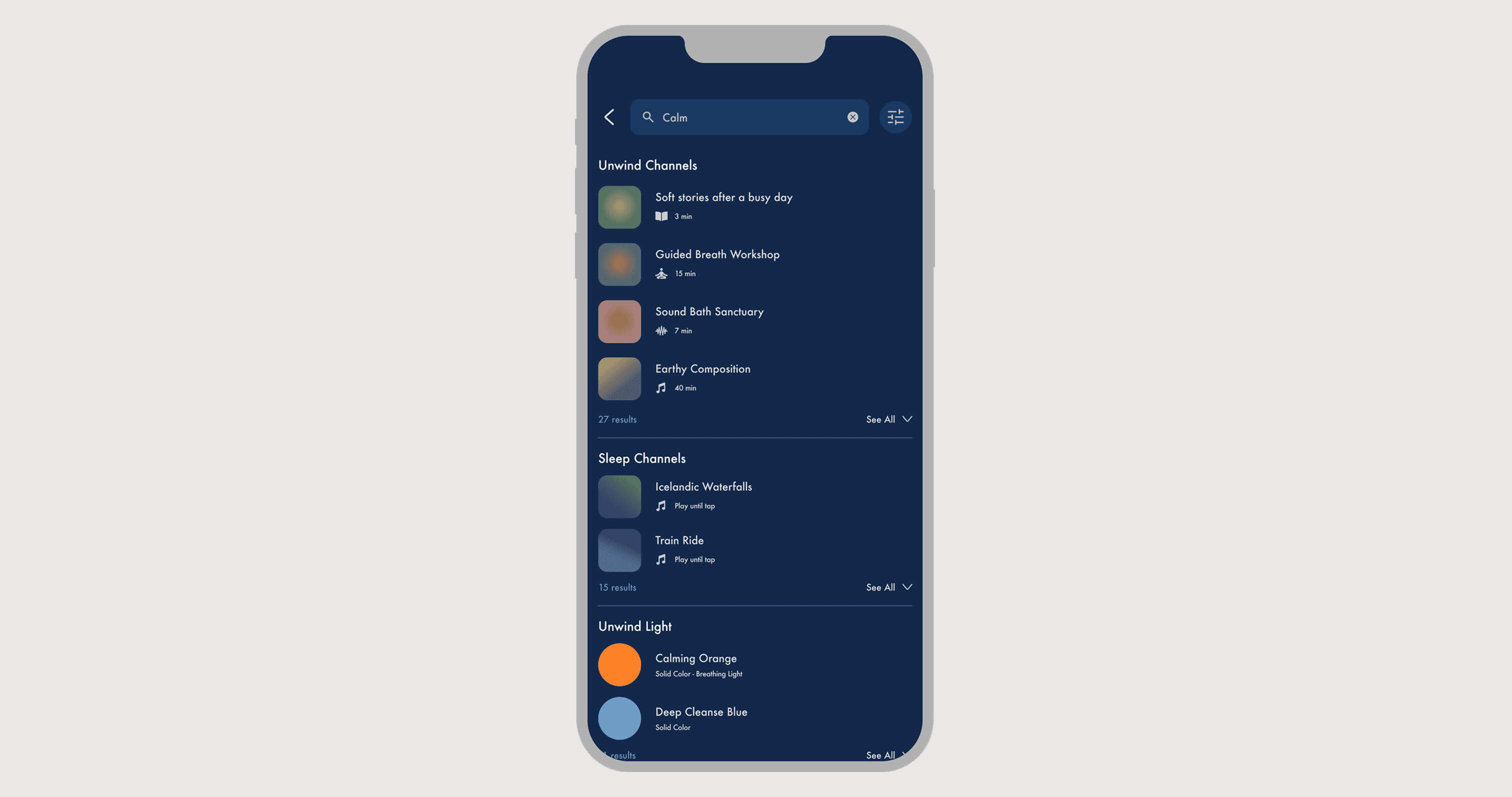
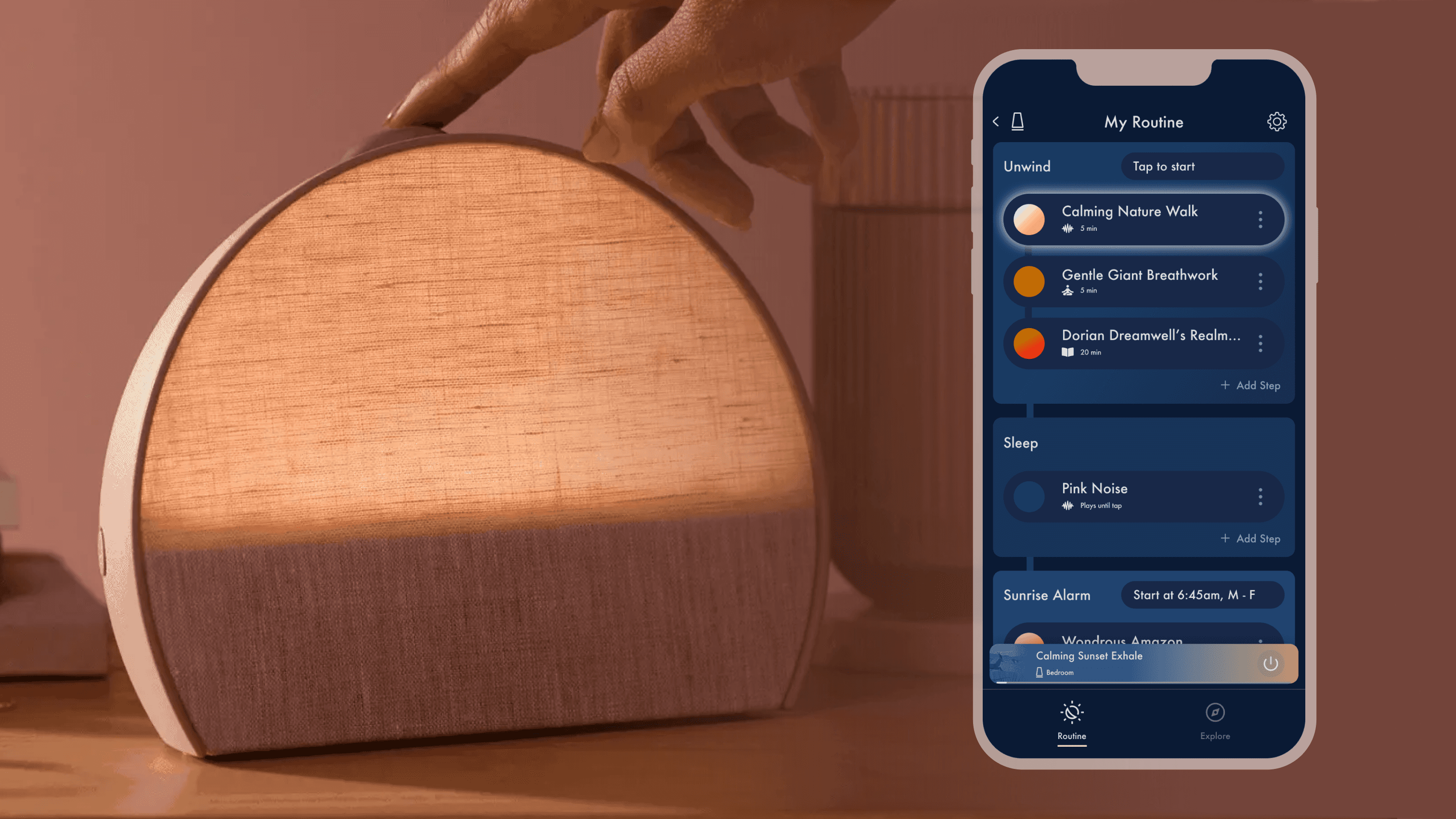
The previous architecture organized content by type, sound and light as parallel libraries. The reorganization put the user's state first: unwind, sleep, sunrise alarm, morning boost. Each daily moment became a section. Inside each section, sound and light arrived already paired, with three curated alternatives if the user wanted nuance.
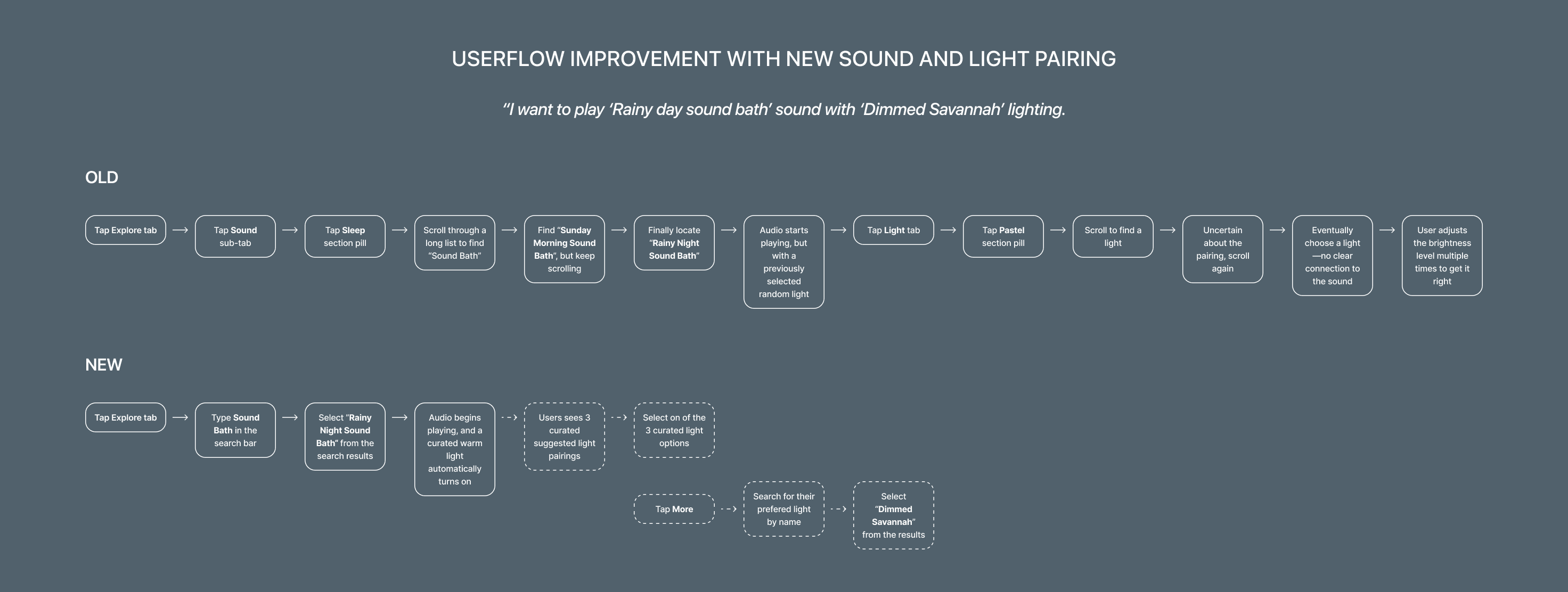
The visible result: the flow to play "rainy night sound bath with dimmed savannah light" went from eleven taps (across two tabs, with multiple scrolls) to six (one tab, one search, one selection). A ~45% reduction in the path from intent to ambient.
The Breathing Light
The hardware could produce smooth, precise brightness gradients with real fine-grained control. In the existing app, this capability was treated as ambiance.
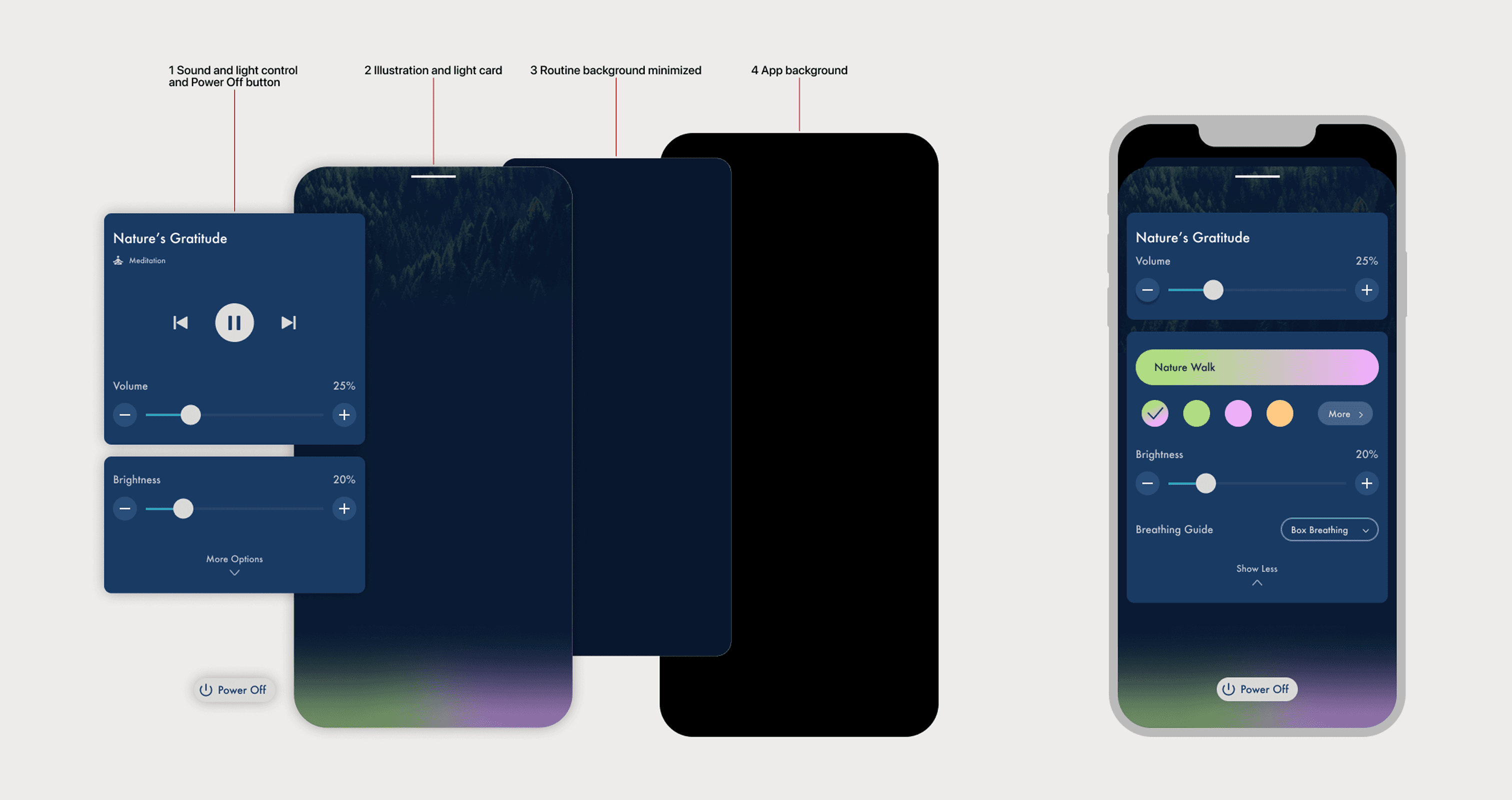
The proposal was to use it as a breathing guide. The light rises as the user inhales and dims as they exhale. No instructions, no on-screen counters, no countdown. The body follows the rhythm of the room.
Box breathing. The user is asked nothing cognitive. They just need to be in the room.
Box breathing
4-4-4-4
equal inhale, hold, exhale, hold. Used in athletic and clinical contexts.
4-7-8
four-count inhale, seven-count hold, eight-count exhale. Originally from pranayama, popularized clinically by Dr. Andrew Weil.
Physiological sigh
a double inhale through the nose followed by a long exhale. Researched at Stanford as one of the fastest known voluntary methods of nervous system regulation.
3 Visual direction: from minimalist to intimate
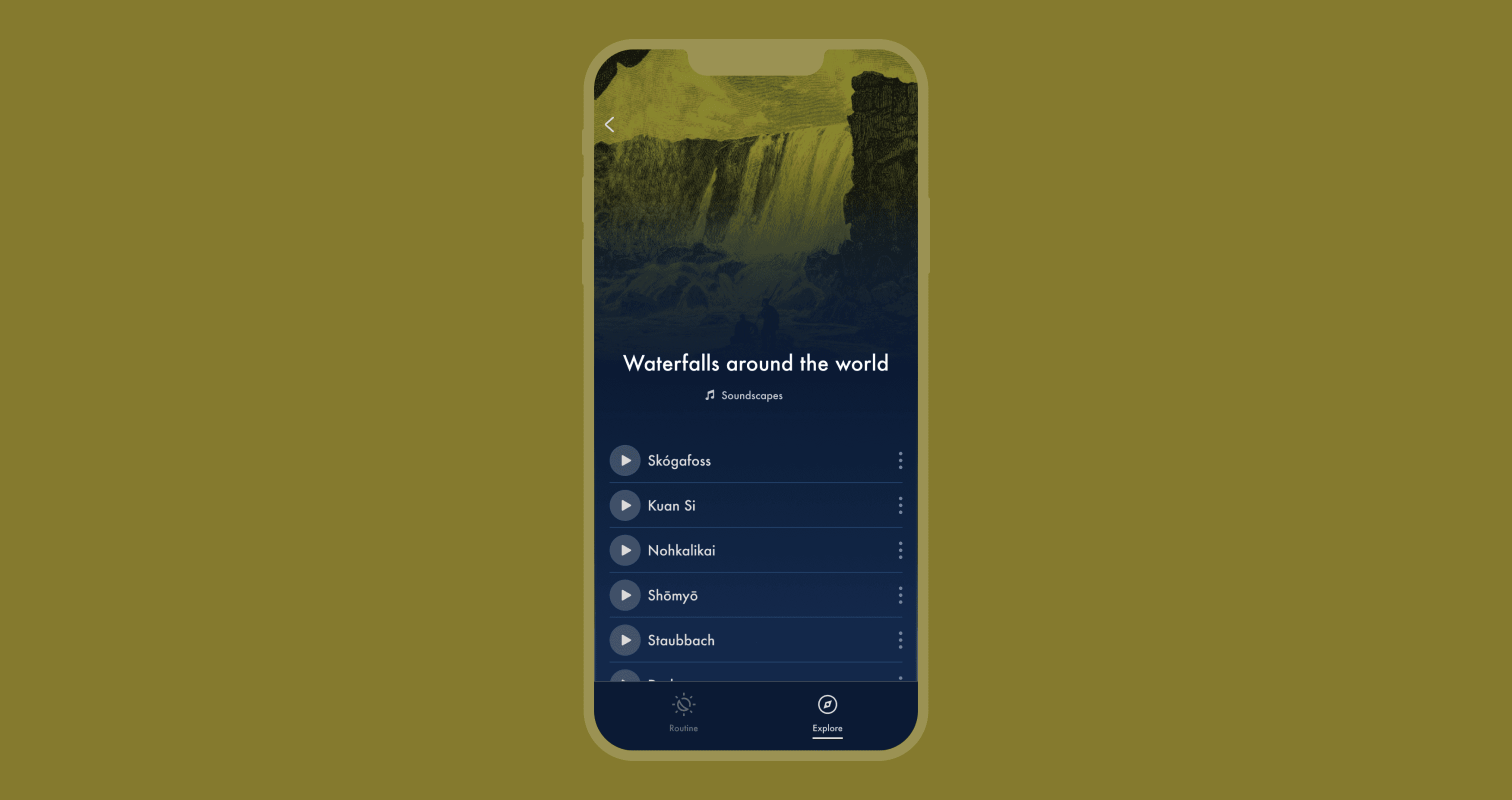
While keeping the signature navy background, added monotone images to bring calmness into the UX.
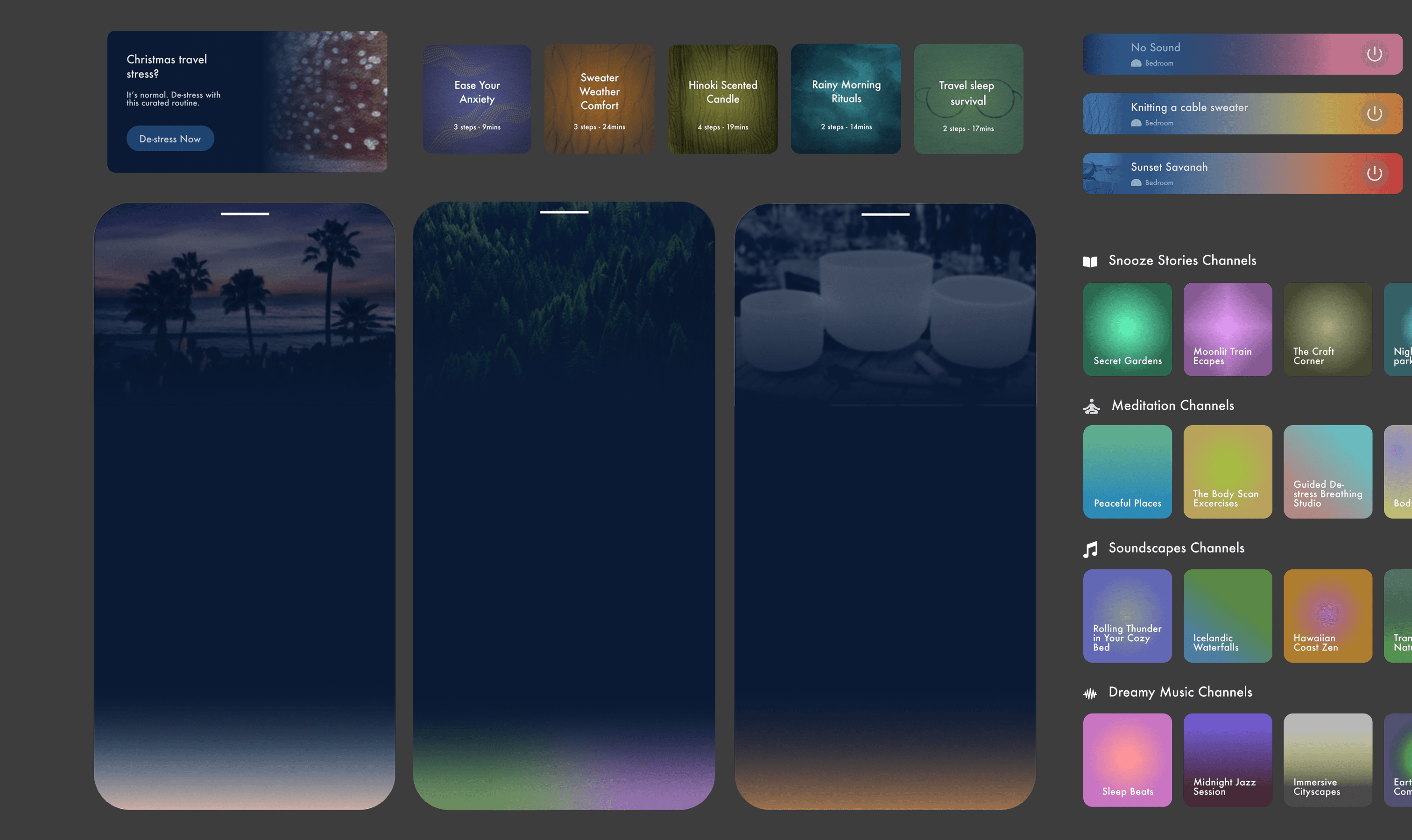
The brand had been minimalist to the point of feeling cold. Sleep is intimate. The visual direction needed to move toward something softer.
I proposed a pastel, illustrative style with the quality of soft pencil drawings. The direction started as exploration for the children's device (Hatch Rest), where illustration had a natural fit, and carried beautifully into the adult device (Restore): dreamy, warm tones against a deep blue background.
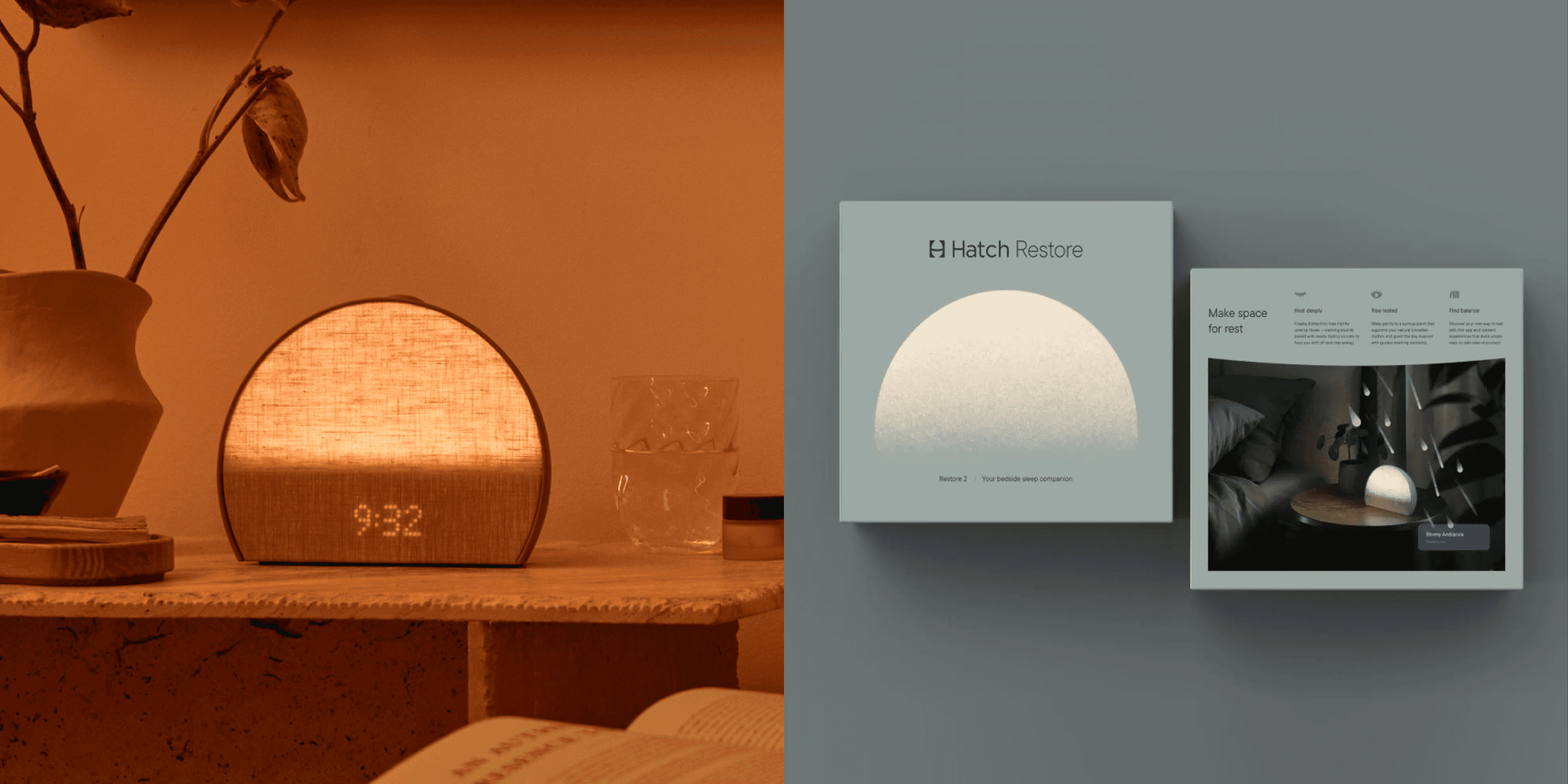
The illustrative visual direction extended past the app, into packaging and marketing, eventually defining the look of the entire brand refresh.
Outcome
Forbes
#1 sunrise alarm clock, 2026
TIME
Best Inventions, 2025
83%
of surveyed Hatch customers said their sleep improved (n=1,000, October 2023)
78%
said they enjoyed waking up more
11 taps → 6
a ~45% reduction in the bedtime setup flow, with curated pairings replacing manual configuration
REFLECTION
What I changed my mind about
Designing for sleep meant designing for absence. That was the discovery, and it took the whole engagement to fully accept it.
The instinct early on was to think of the app as a product I was improving. Faster flows, clearer hierarchy, better content discovery, all the usual moves. The research kept pulling the work somewhere harder: the app's job was not to be a better app. The app's job was to deliver the user to the device and then stop. Engagement was not the goal of this product. It was a cost.
That's a different design problem than the one I'd assumed I was working on. It also reframes how I think about user state generally. The user at 11pm and the user at 11am are not the same person, even when they share a body. Configuration that feels like flexibility during the day reads as friction at night. State-aware design is the senior version of the question — not how much control to give, but what the user can actually metabolize in the state they're in.
I think about this often now in conversations about AI in consumer products. The reflexive design move is to give users more dials, more visibility, more chances to intervene. That's correct in some contexts. In a restorative context, in a calm context, in a moment where the user came to the product to stop deciding, the right answer is usually the opposite.
What I'd push next
Weave breathing into the ambient layer
The Breathing Light is currently a discrete mode. Breathing rhythm can become a property of any light experience (a sleep story, a sound bath, a meditation), not a separate menu item. The hardware allows it; the architecture is the next step.
Measure the breathing habit specifically
The Hatch survey numbers cover sleep broadly. The interesting behavioral question is whether the Breathing Light is forming a nightly habit or remaining a one-time curiosity. That distinction shapes what gets built next.
Bring the experience off the device, briefly, on purpose
Live guided sessions, hosted by Hatch, where users gather around their devices for a shared evening practice. The app's role is to set the time and start the rhythm, then disappear.
Apply the principle backwards
The same logic that informed Restful Escape applies to morning routines. The device can carry the wake transition the same way it carries the bedtime one. Less app. More room.