Trust as infrastructure
Designing for the 11pm questions: what happened, and how do I know?
Financial Operations Workbench at Zuora
Design strategy lead · 0→1 · Workflow platform · AI agents
Summary
Description
An operations workbench (and the trust infrastructure that earned its adoption) for the people who run subscription businesses at scale.
The Problem
Five tools for one job. The work was scattered, and the proof of it was nearly impossible to reconstruct.
My Role
0-to-1 design strategy lead. End-to-end UX/UI across operator workflow, audit surface, and platform integration.
Clients
Anthropic, Microsoft, the New York Times, Zoom, and others.
Outcome
The proof of the work had no home.
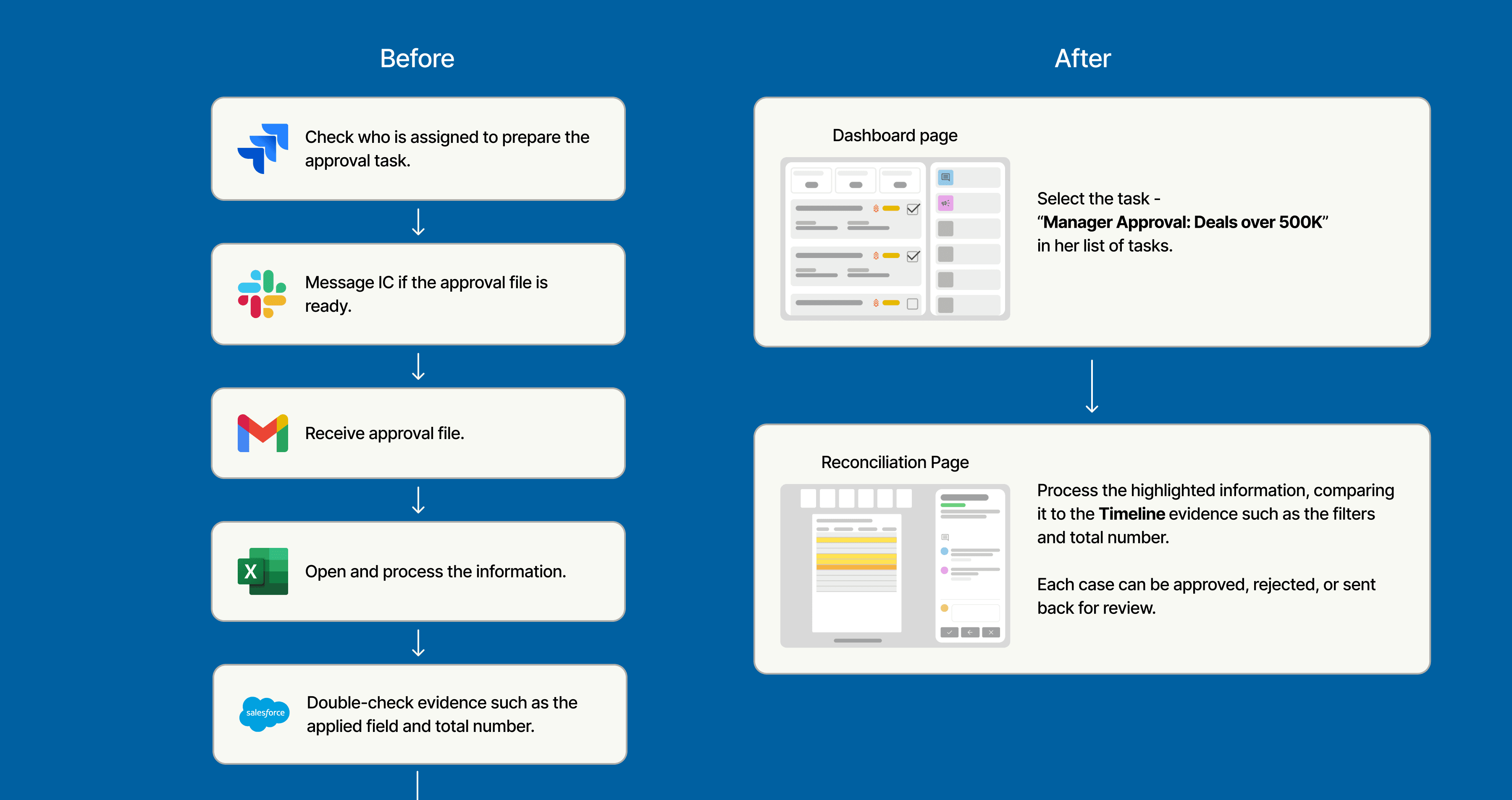
Lucidchart for process maps, Excel for reconciliation, Gmail for approvals, Jira for tasks, Slack for everything in between, BlackLine for audit. When work scatters this way, the proof of what happened lives everywhere and nowhere. Someone pays for that later, the analyst reconstructing a week of decisions before morning.
A previous team built a wizard for this. Operations work runs in cycles, not lines. I rewrote the brief: become the single place where the workflow and the evidence live.
Designed for two, operator and auditor.
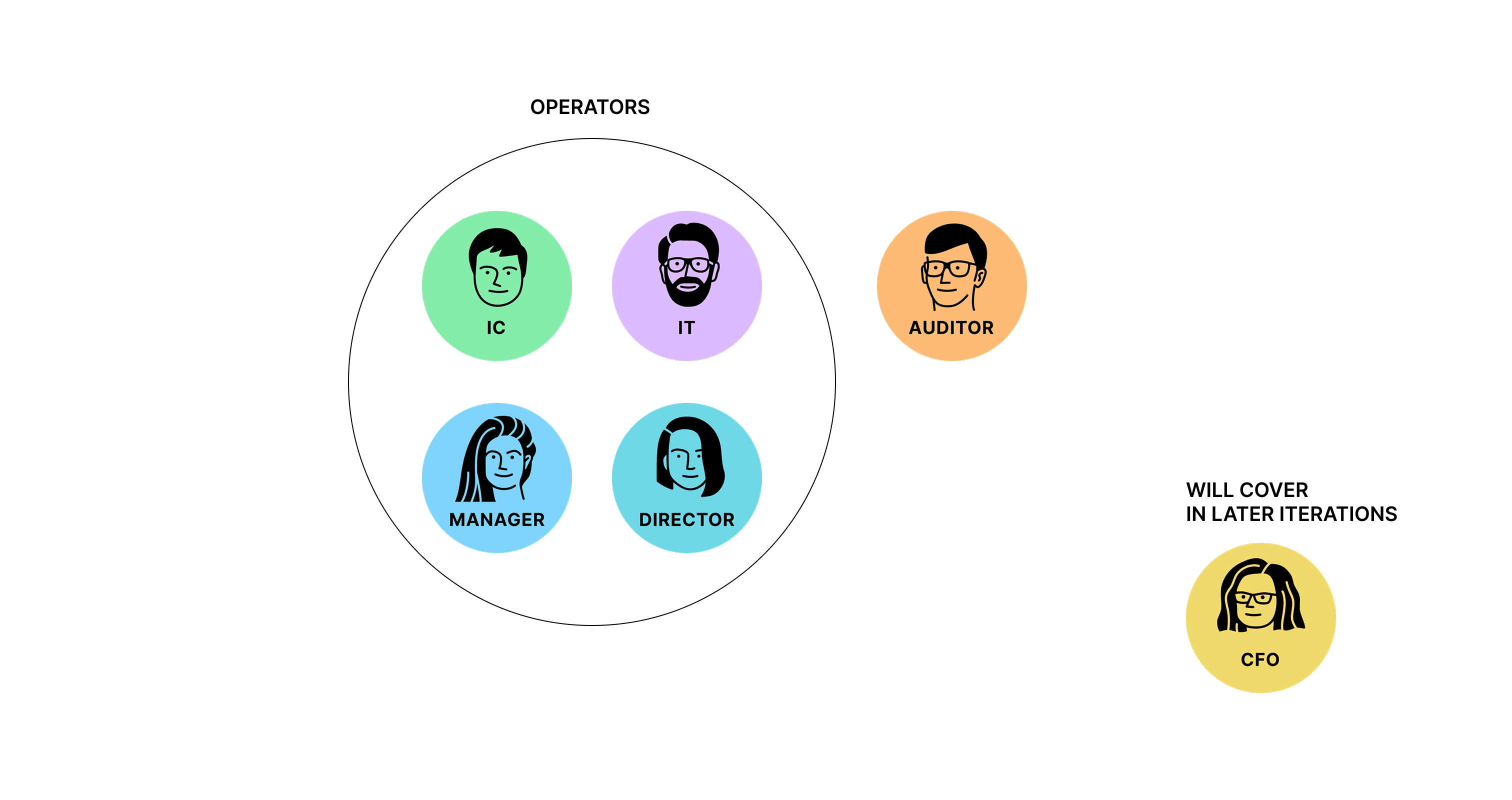
Operators running cyclical work
Accountants and ops managers. Monday morning, the answer to "where do I start?" used to live in five different places.
"I need to be able to explain what happened. To my manager, to an auditor, to myself at 11pm when something looks wrong."
They didn't want speed. They wanted the answer to hold up.
Auditors reading the trail
Internal and external, by design. The auditor is there to assess whether a process can be defended, not the daily back-and-forth.
The system
Glass box, not black box
For multi-site enterprise clients, this meant building structure once and theming it across sites, instead of duplicating effort five ways.
What we've built
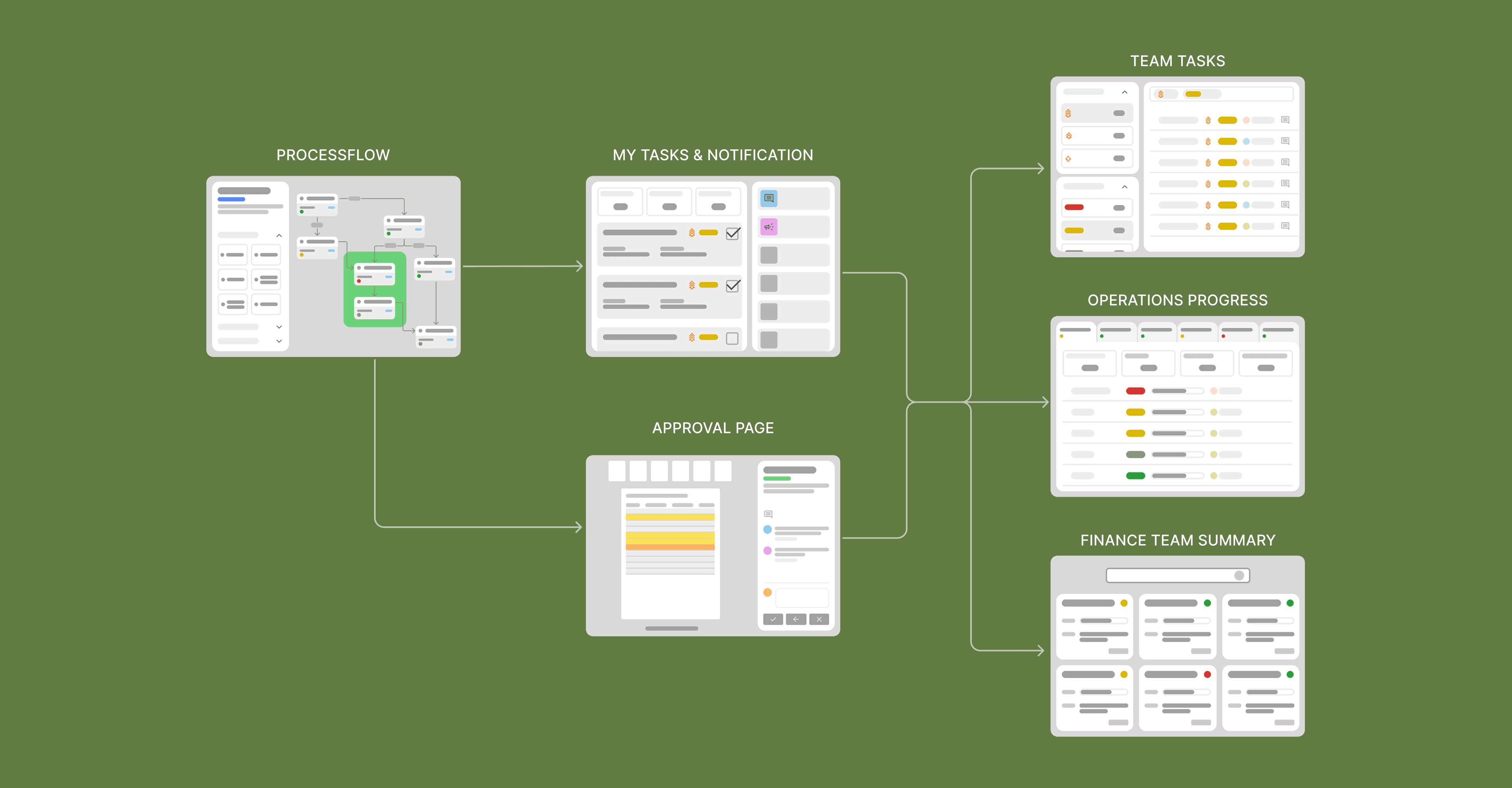
Process Flow: a shared map of how work moves
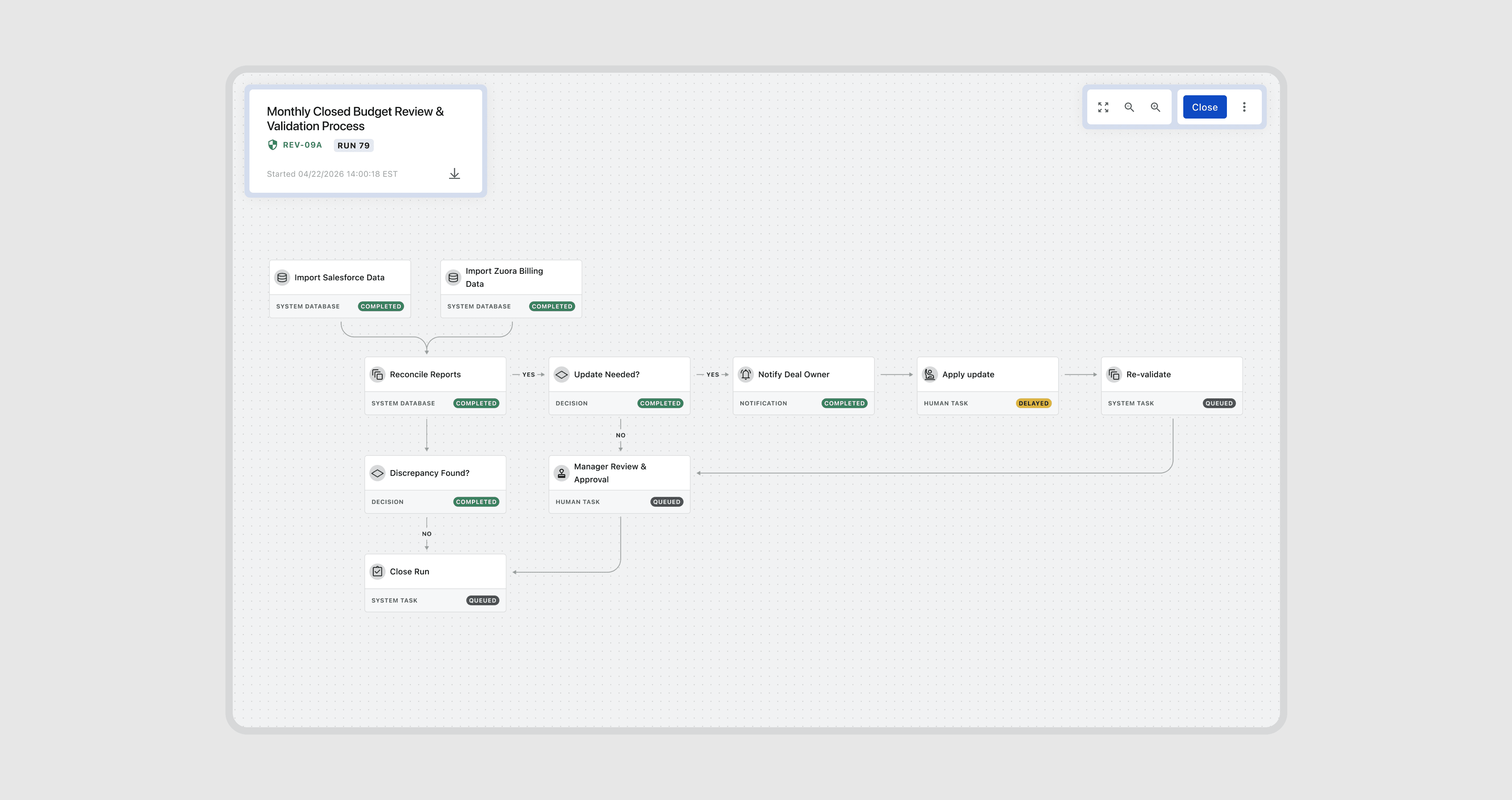
The vocabulary we built into the system: a task is one step, a process is a group of tasks, a run is one execution from start to finish.
Finance work isn't fully automated and isn't fully manual. The system handles the cyclical scaffolding (data pulls, routing, status changes); people step in at judgment moments. Both kinds of work appear in the same structure, with the human handoffs visible to everyone touching the case. The manager from the opening enters this map at one node: the approval. The system handles everything that gets her there.
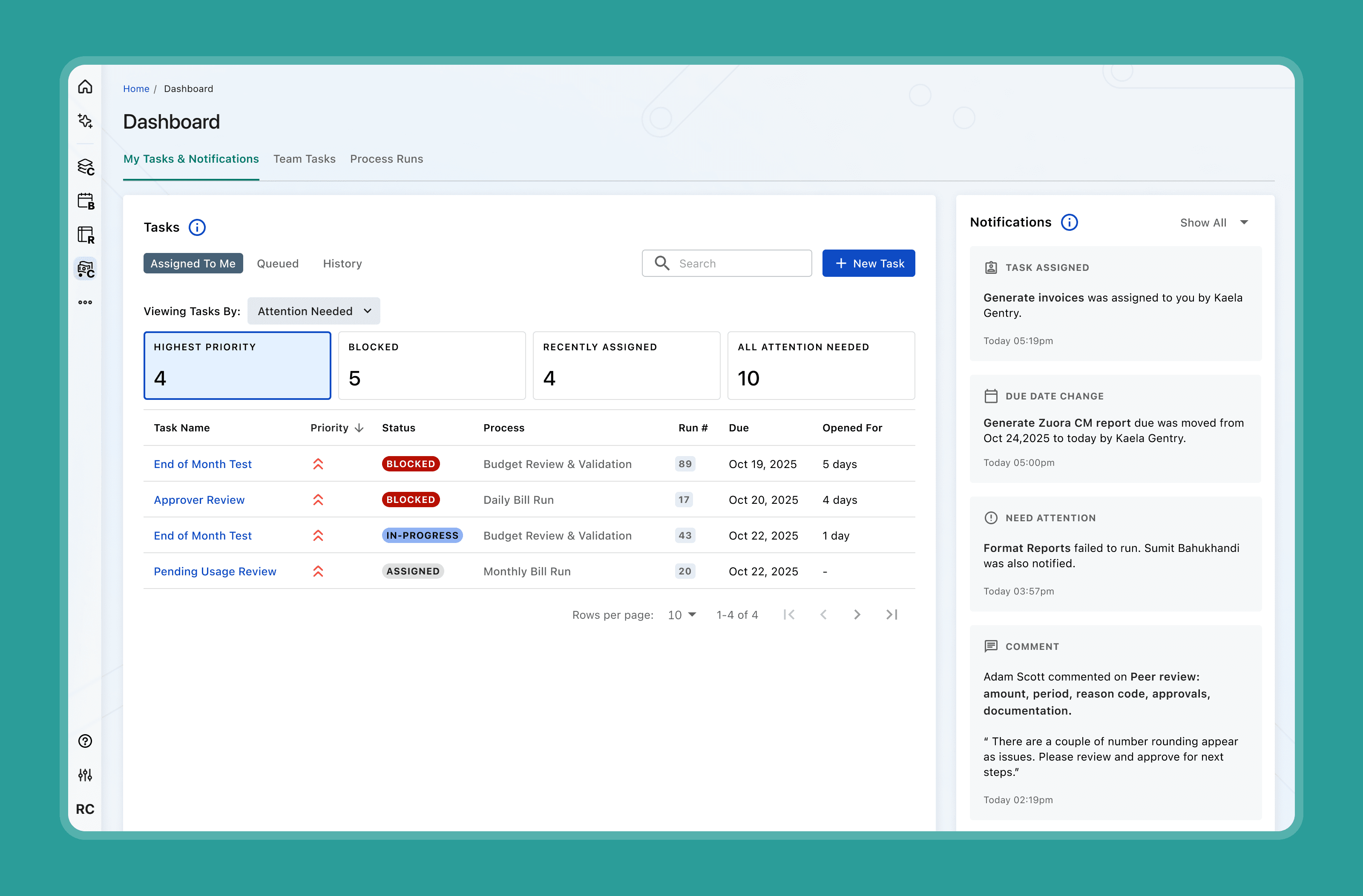
Dashboard (My Tasks & Notifications) : where the day starts
Four filter cards at the top: blocked, highest priority, recently assigned, all attention needed. Each shows a count (5 blocked, 3 highest priority) and clicks to filter the list beneath. Stats and navigation simultaneously. The cognitive cost of triaging at 8am: zero.
A notification panel on the right surfaces what changed (comments, due-date updates, system errors), scoped to her own work. Not a global feed. The filter at this layer is: does this affect what I'm trying to get done today?
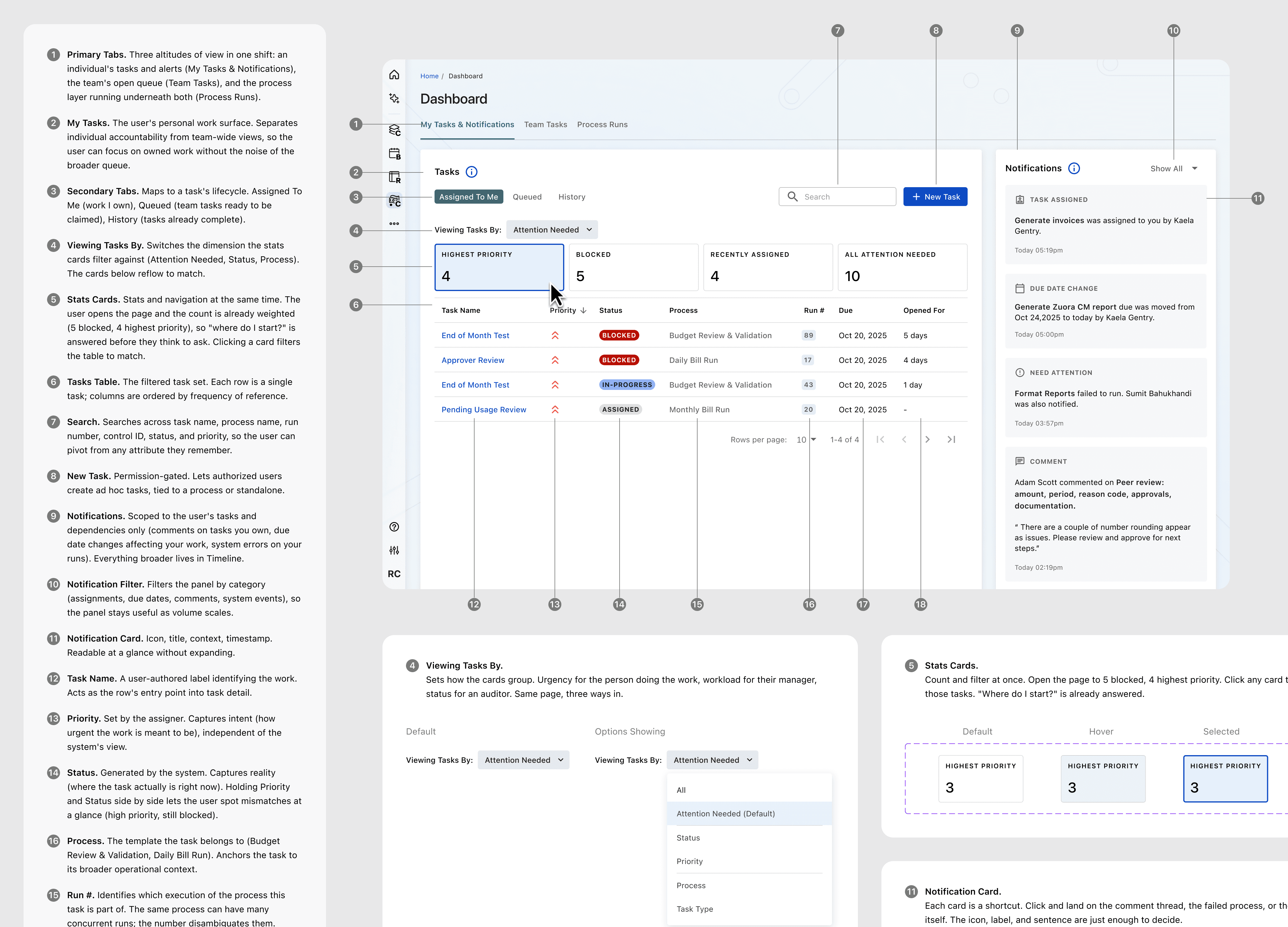
My Tasks tab. The decisions behind every visible element.
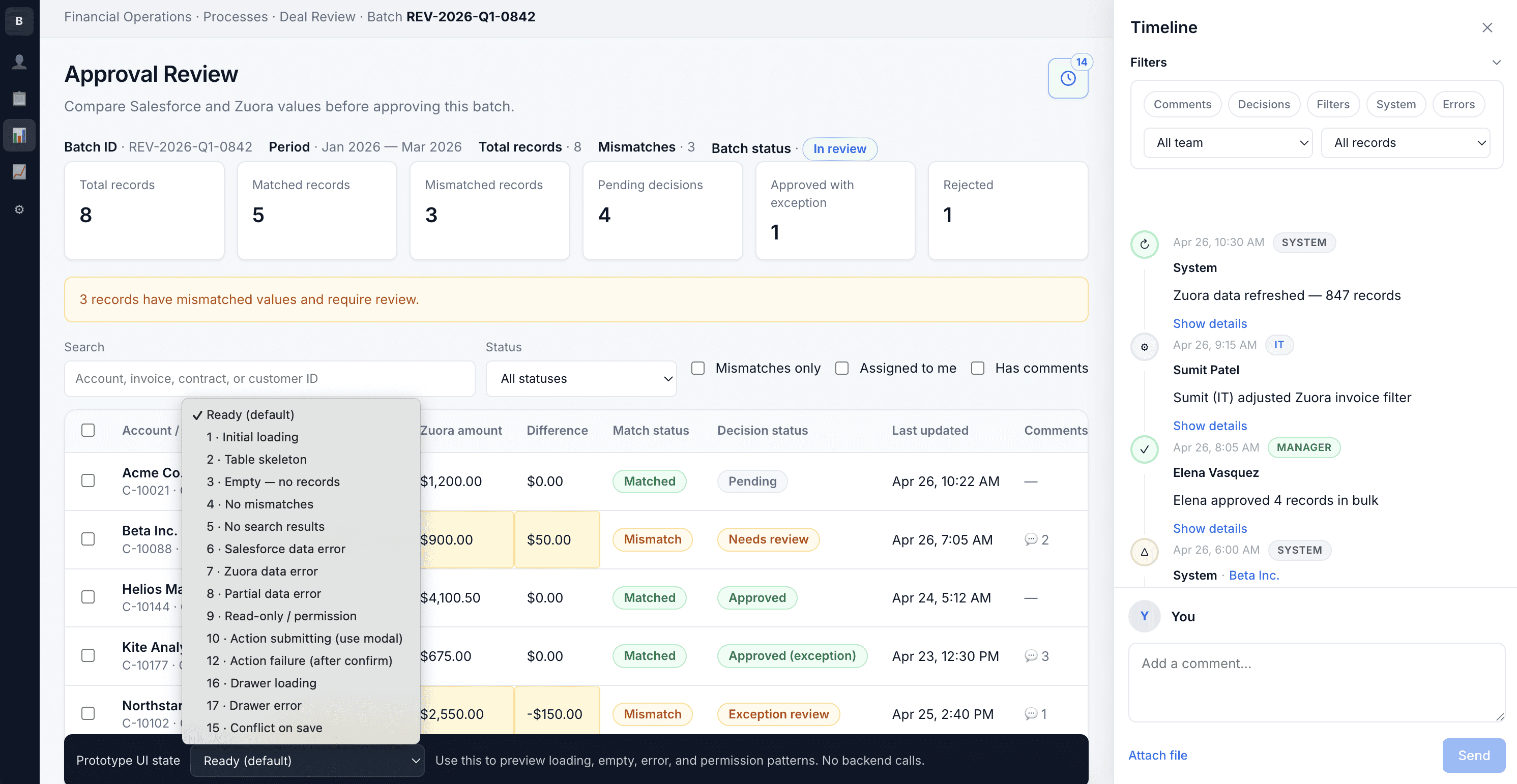
Approval Page & Timeline: the trust layer in detail
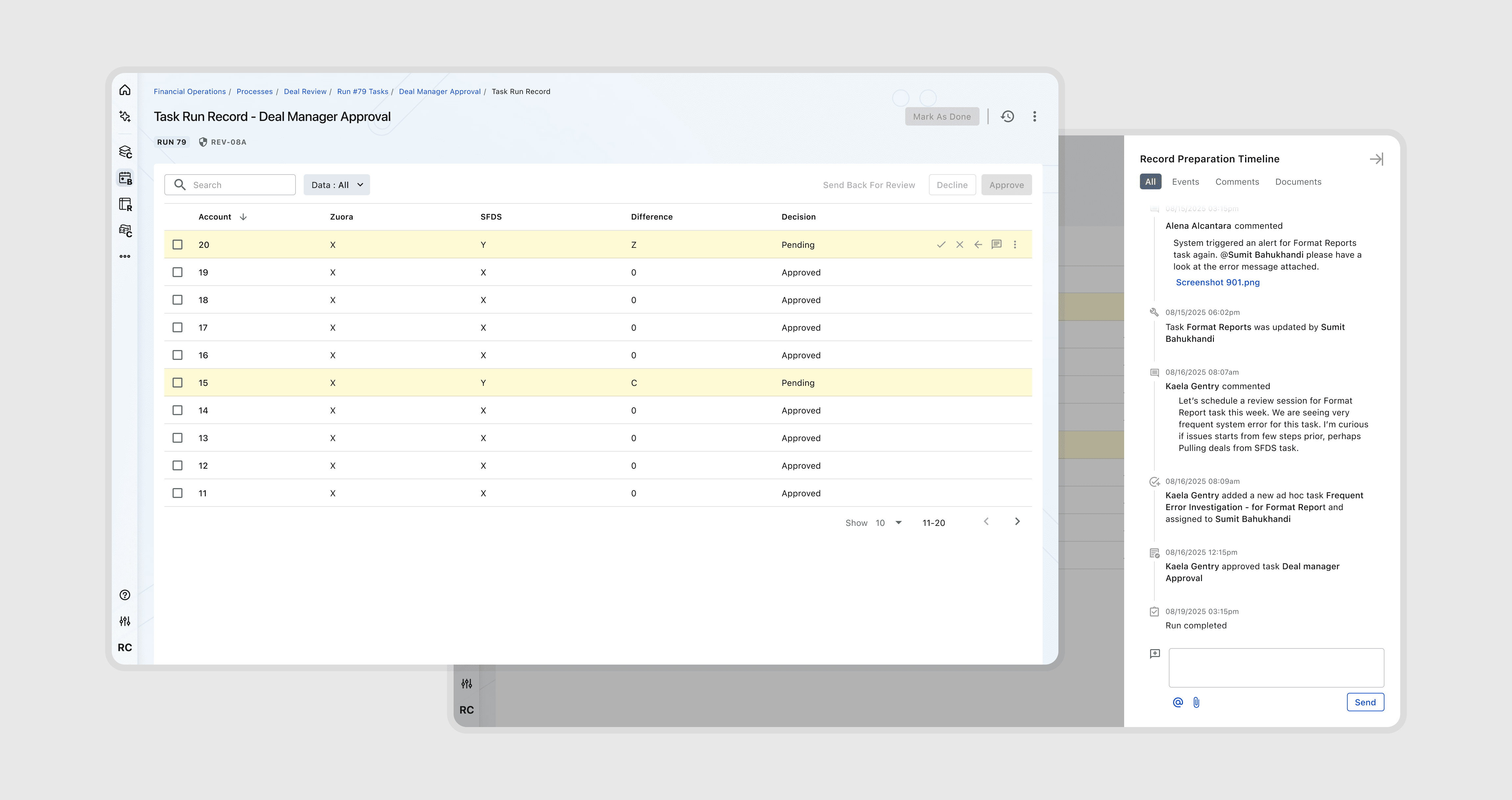
For operators, an activity log: what happened, when, who touched it. For auditors, the same data as an audit trail, generated automatically as work happens. Views are curated by access permission.
When users can see what the system did, they begin to depend on it. Once that dependence is built, AI lands on a foundation users trust.
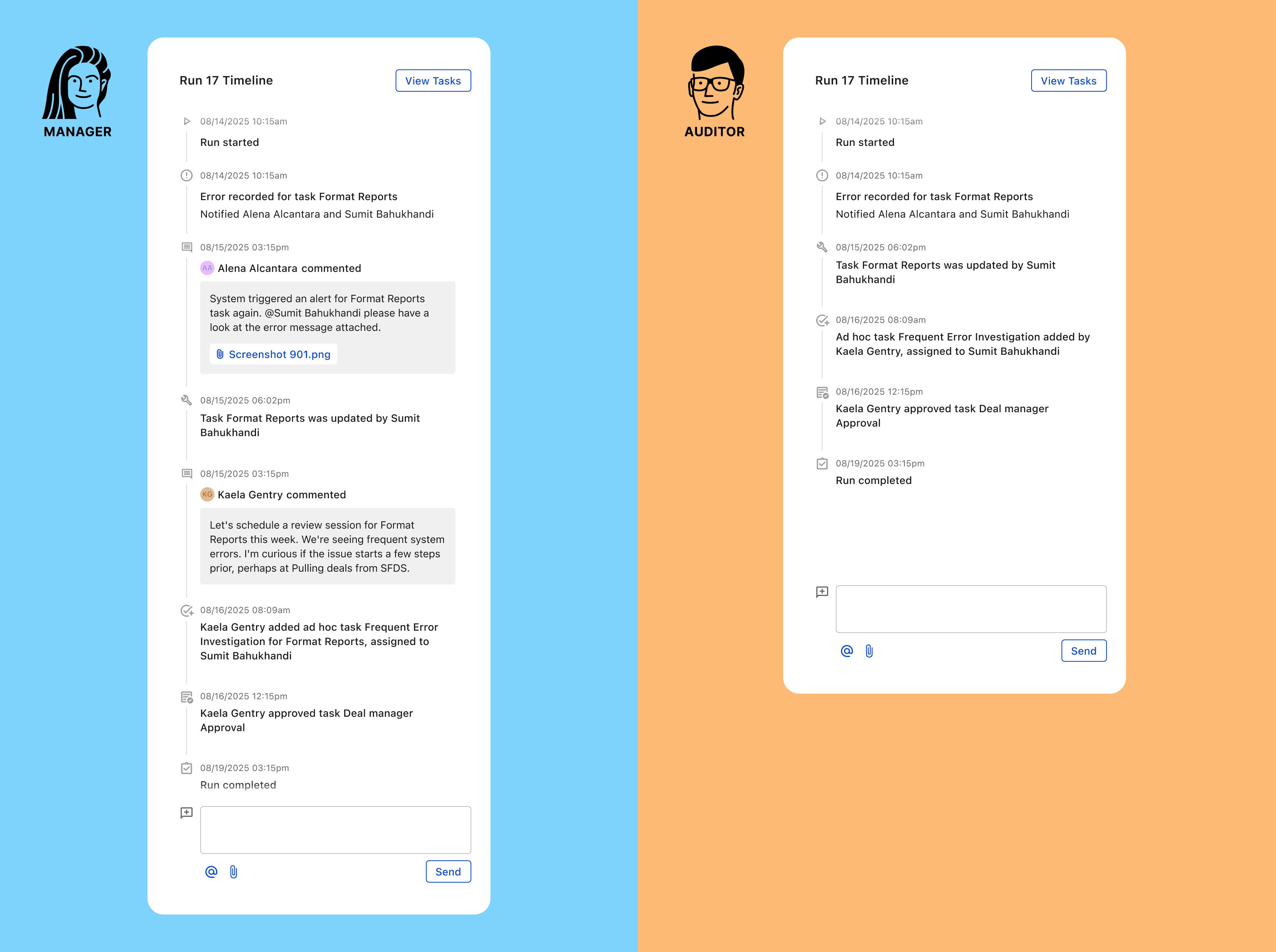
Internal auditorsees operational depth. External auditor sees a scoped, defensible record. Granularity in compliance is a security consideration: more context widens the surface area for scrutiny without serving the audit. Designed as a data-model decision, not a permissions bolt-on. It's a privacy-by-design moment.
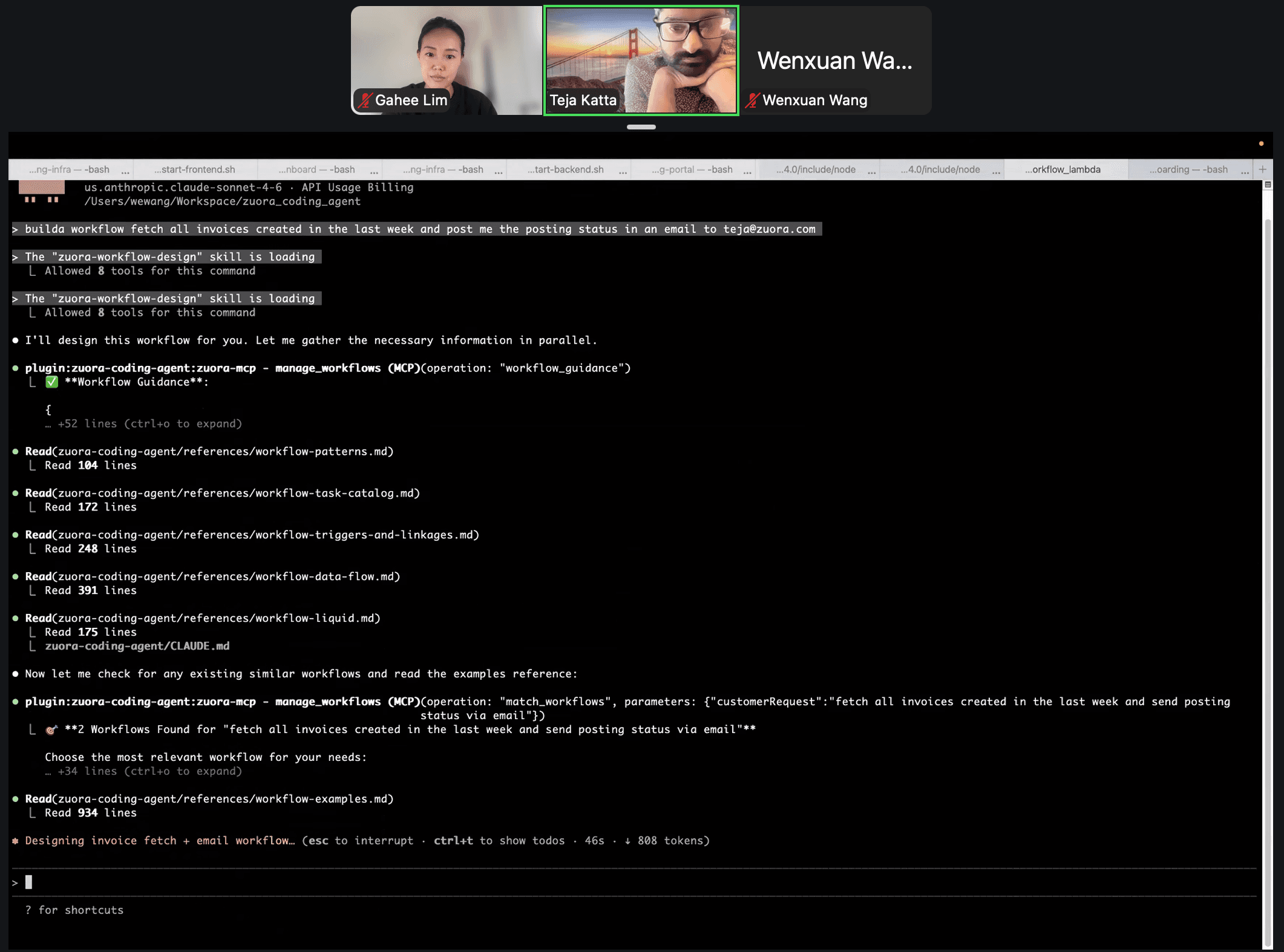
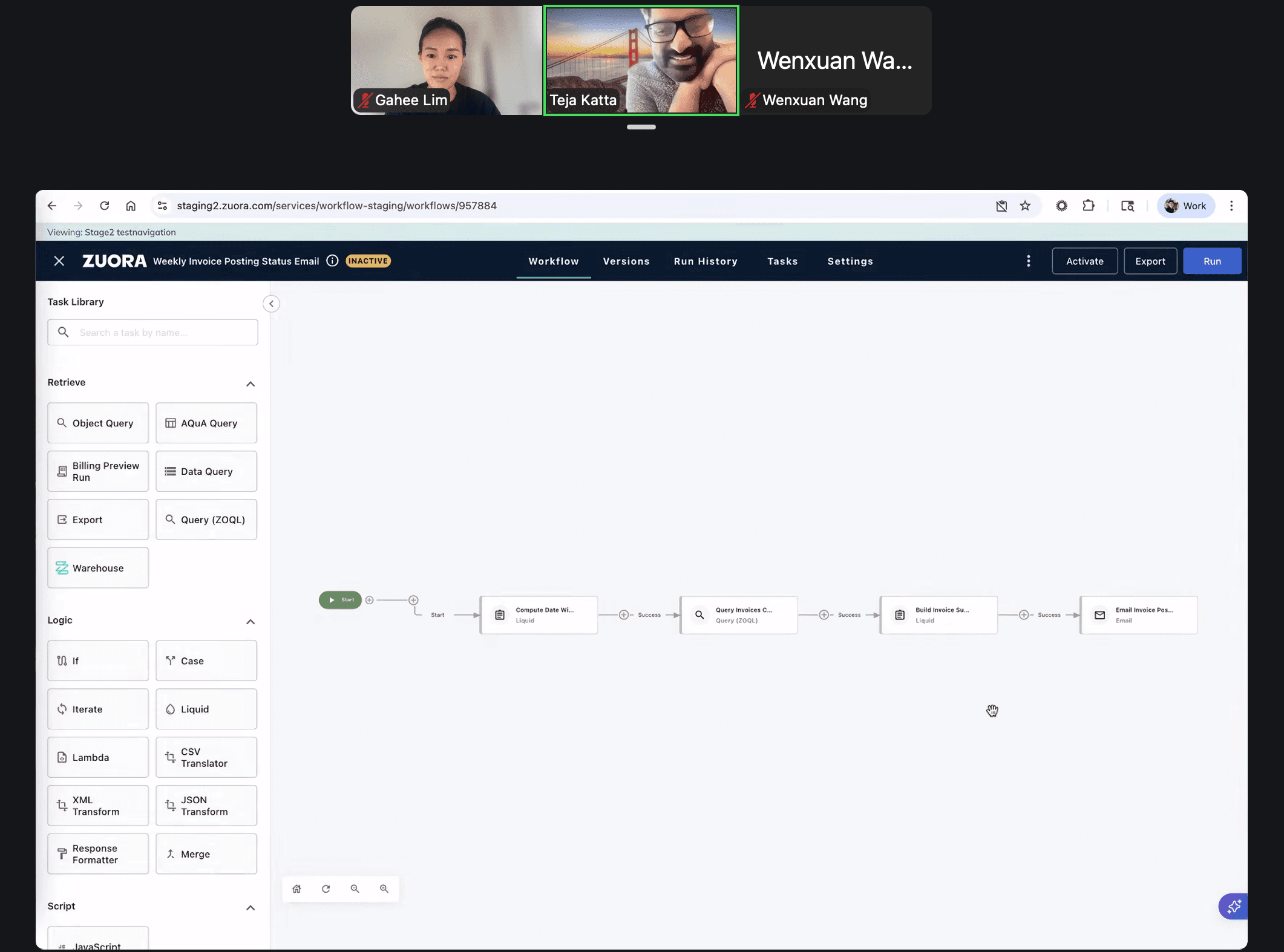
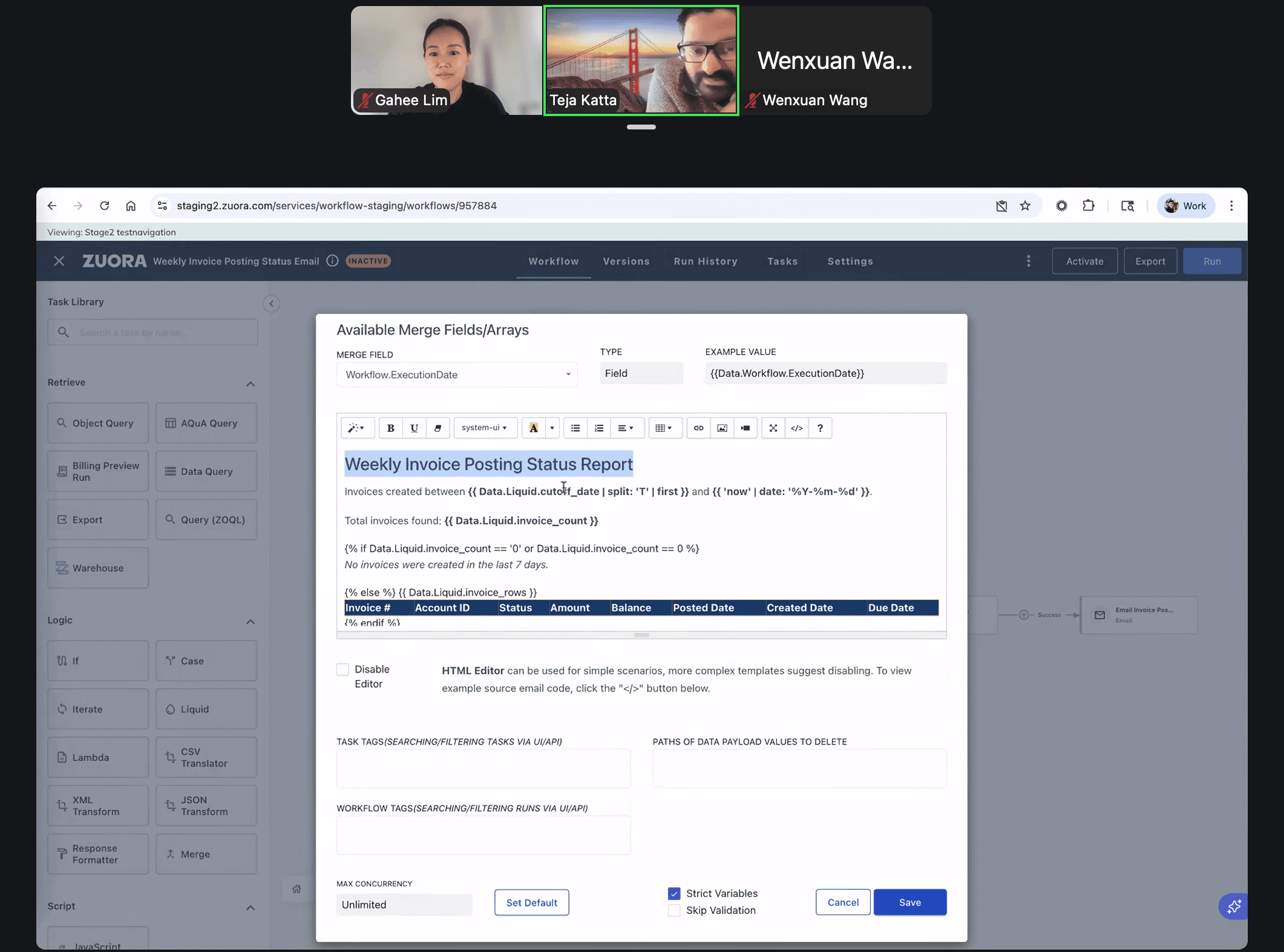
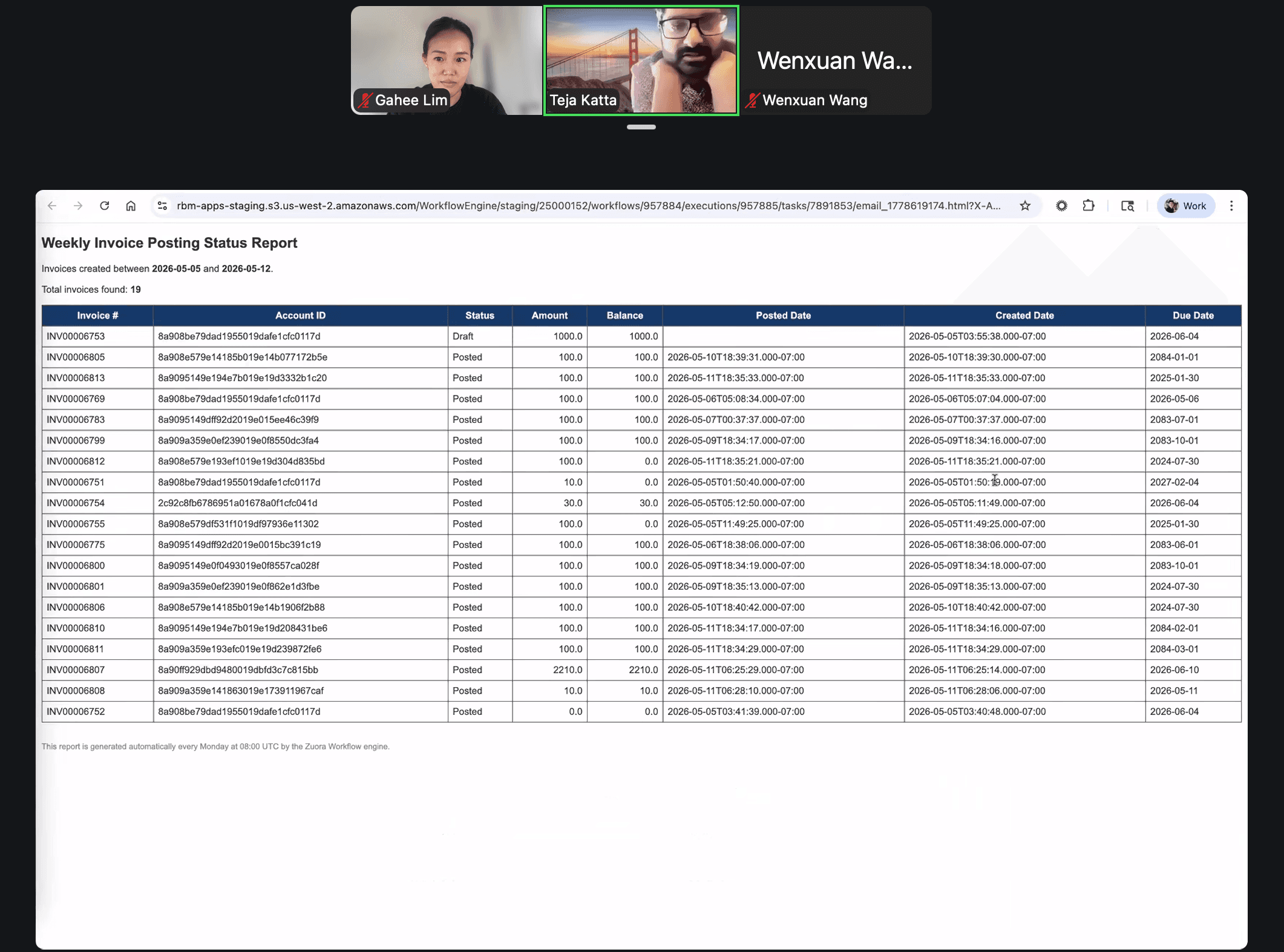
We negotiated for a parallel track. An LLM and agent development rack was happening along side while we are building the trust infrastructure. So when the agent layer was ready, it could land on a foundation user already trusted. We are testing the merge here.
Drawers as connective tissue
Eight features, one interaction model for depth. Click any task, process, or control and a drawer opens, without leaving the page.
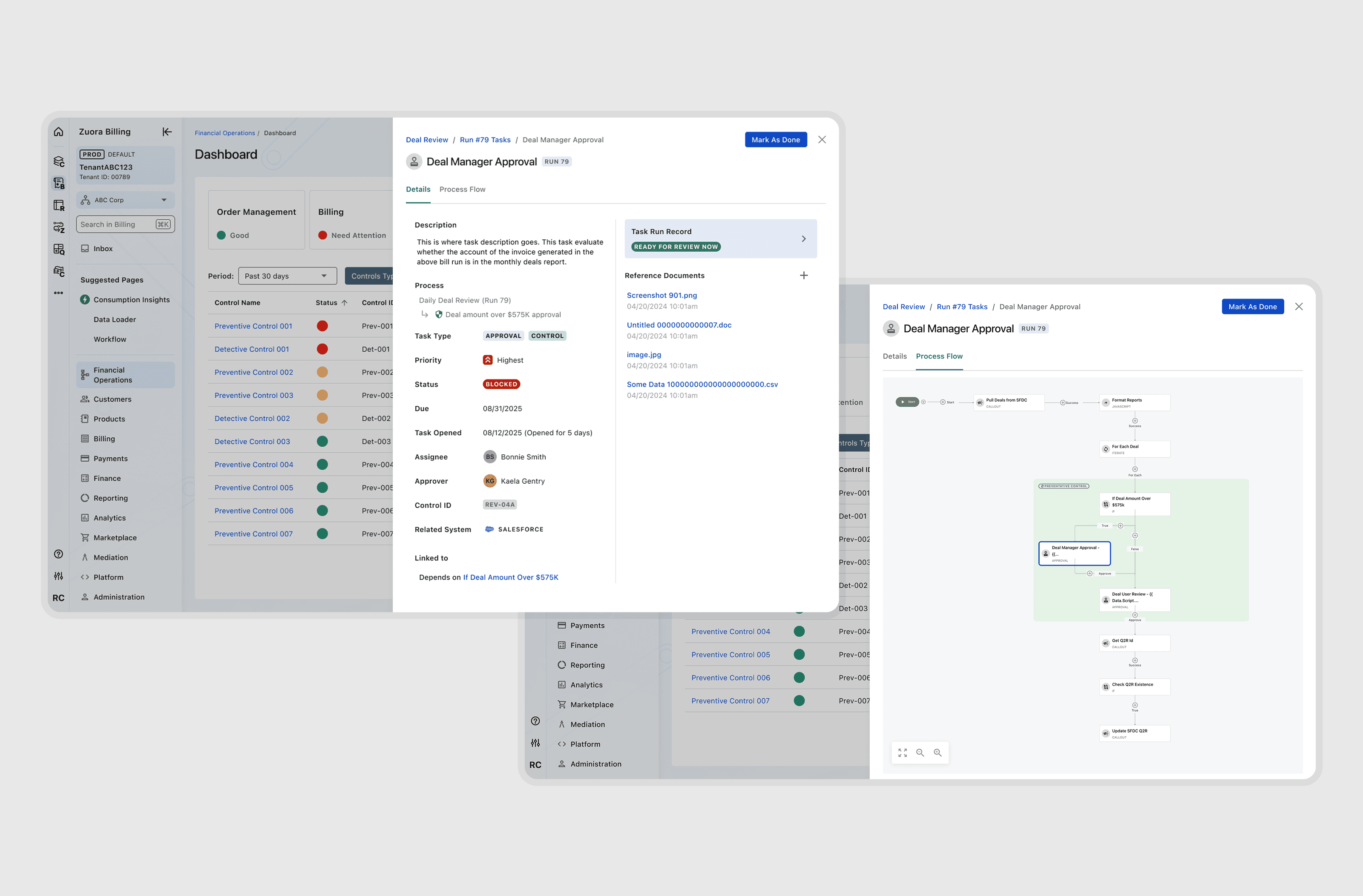
The most-iterated component in the system: multi-tab variants, page-bridging behavior, scroll affordances, none of it visible to the end user, all of it load-bearing.
Outcome
A common reconciliation workflow with integrated automation
70%
Of design-partner users said Timeline made them more willing to consolidate into the workbench
85%
Of that group open to agentic AI when Timeline made the reasoning inspectable
My Tasks + Notifications
Adopted as standards by other Zuora product teams
Added to the design system as net-new contributions
NYT, Airbnb, Lyft
Called this the most exciting item on the 2026 roadmap
Reflection
Where the research changed me
Going in, I assumed the team's first instinct (move fast on AI features) was the wrong tempo, but the right direction. Field research changed the picture. Trust infrastructure isn't a phase before AI. It's the design problem AI assumes someone else has already solved, and almost no one has.
Capability without inspection isn't adoption. It's exposure.
Where this opens up
Train agents on the reasoning patterns logged in Timeline
What happened, who decided, and how the decision was made. The third layer is what teaches an agent to act like the team.
Mobile companion for review and approval
Phase 1: notifications. Phase 2: full task management. Phase 3: a conversational AI agent that understands the same workflow data operators have come to trust.
A glass-box pattern library beyond finance
The trust principles transfer. Clinical decisions, legal review, AI-mediated work generally. The patterns we built want a wider home.