Setup
The proof of the work had no home.
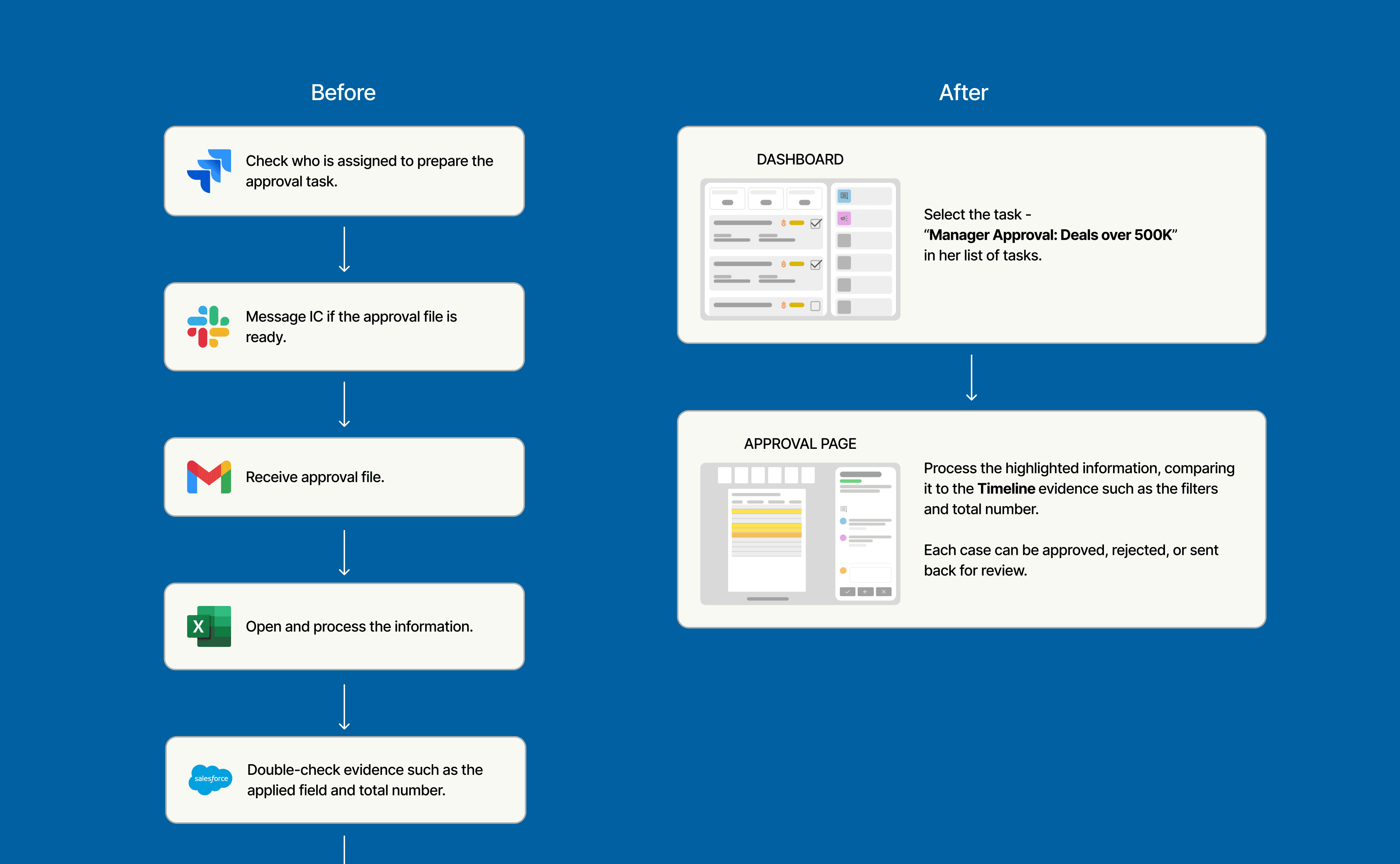
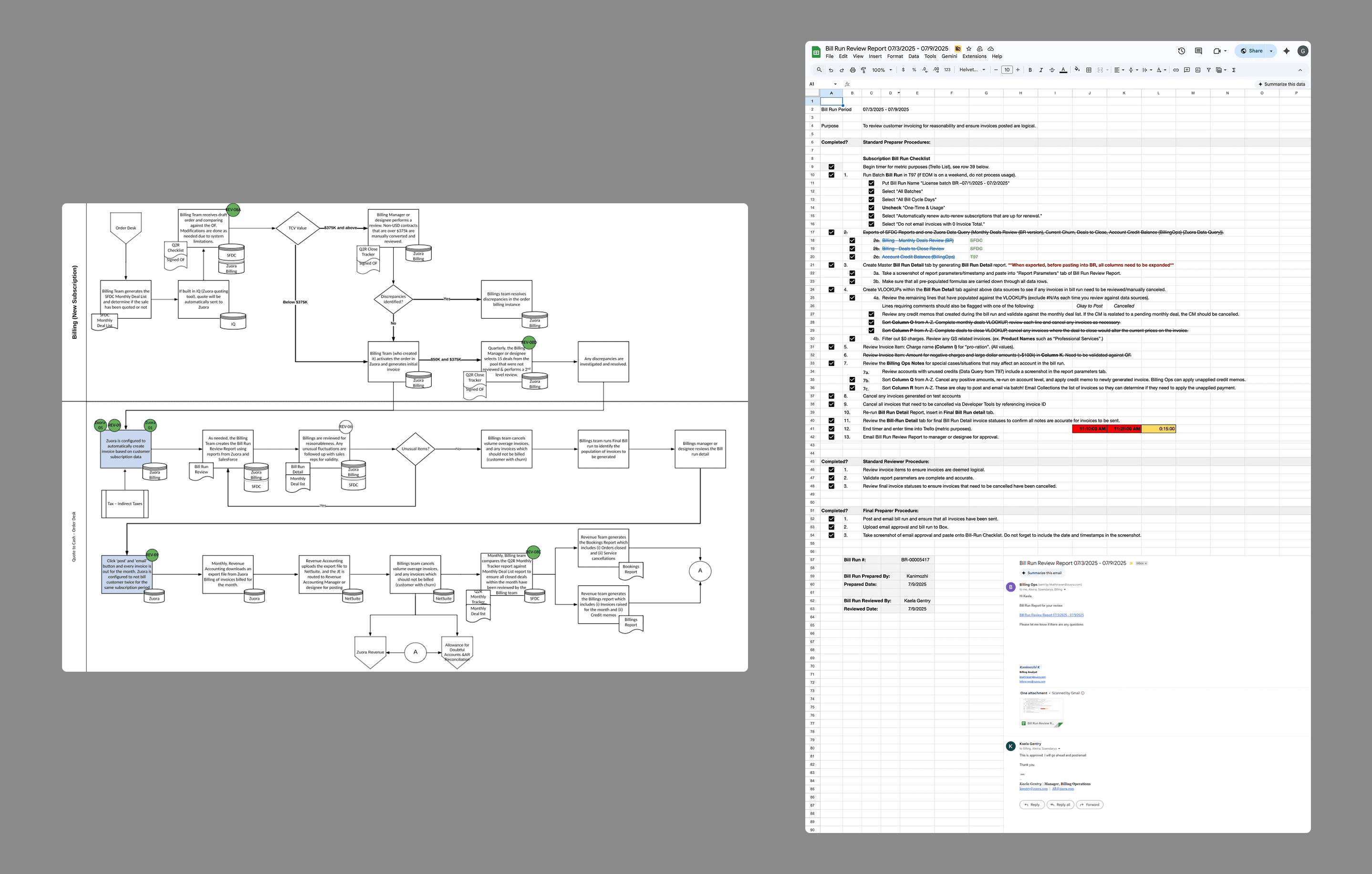
Lucidchart for process maps, Excel for reconciliation, Gmail for approvals, Jira for tasks, Slack for everything in between, BlackLine for audit. When work scatters this way, the proof of what happened lives everywhere and nowhere. Someone pays for that later: the analyst reconstructing a week of decisions before morning.
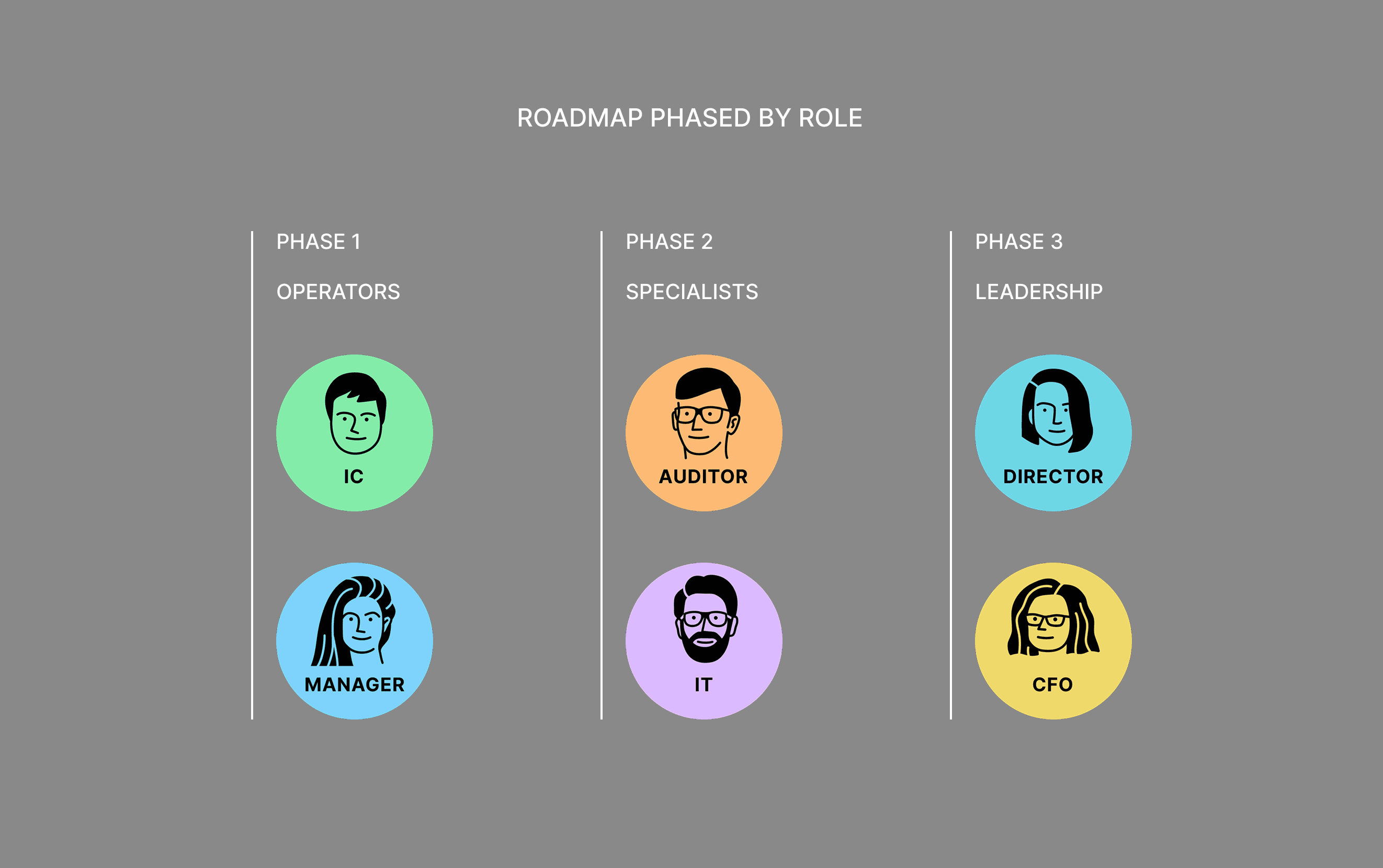
Six roles, three jobs: doing the work, defending it, and steering it.
Operators running cyclical work. Specialists reading the record. Leadership steering by the signal.
In high-stakes work, a system earns trust by being inspectable, not by being smart.
Trust infrastructure first, then AI on a foundation people already trust. Same destination, different path in.
Features
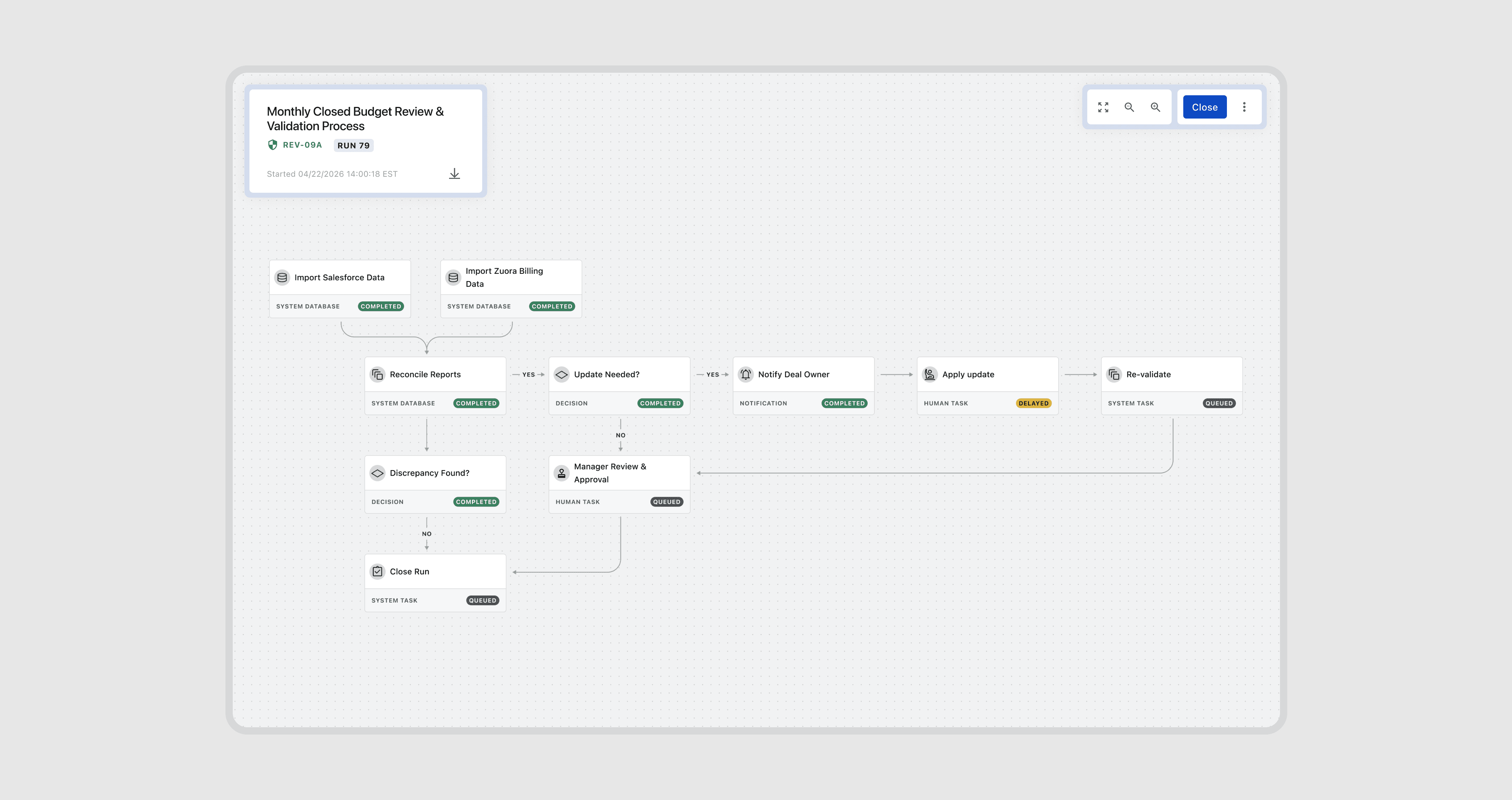
A shared map of how work moves. The system handles the cyclical scaffolding; people step in at judgment moments.
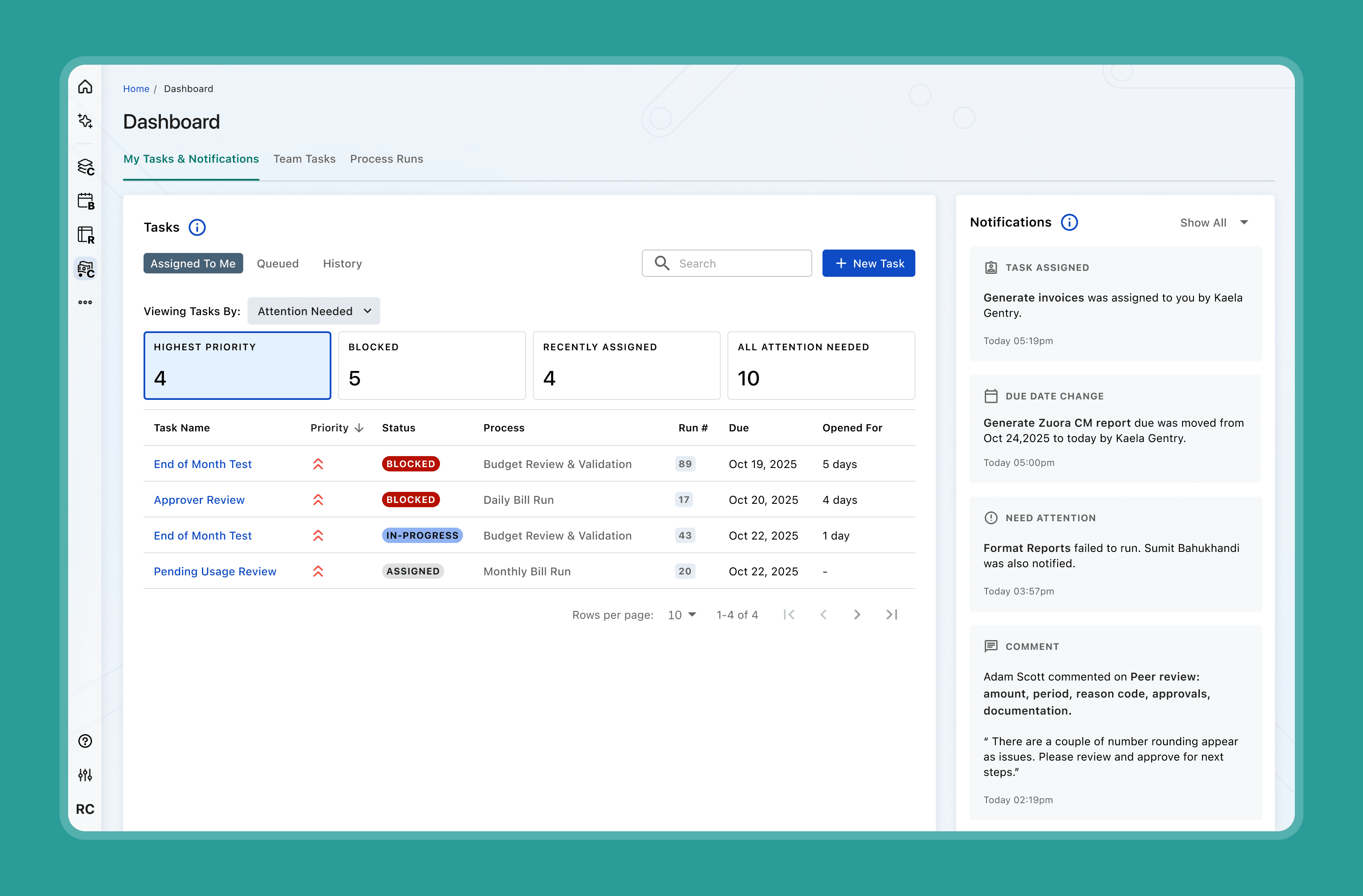
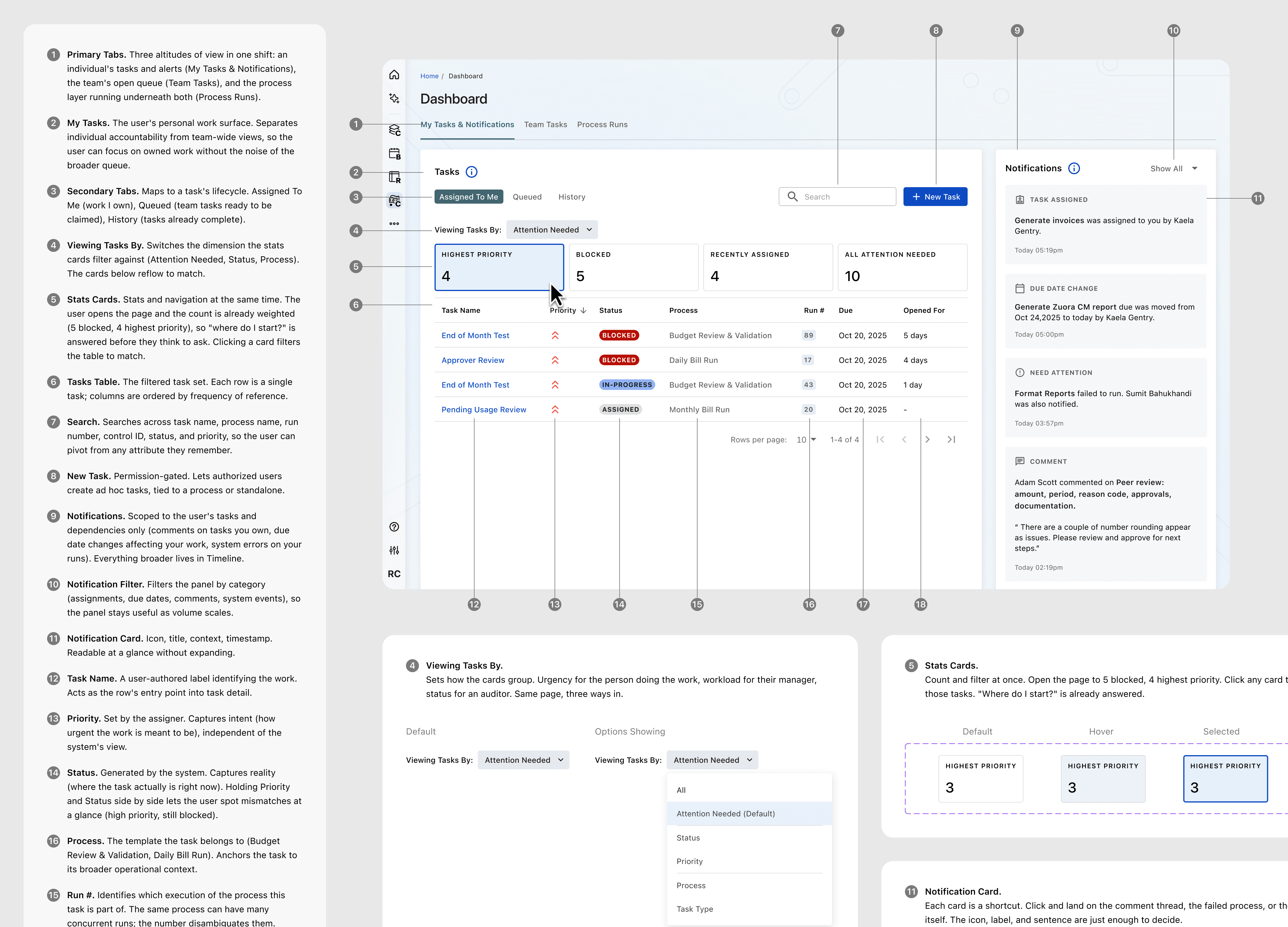
Where the day starts. Four filter cards at the top: blocked, highest priority, recently assigned, all attention needed.
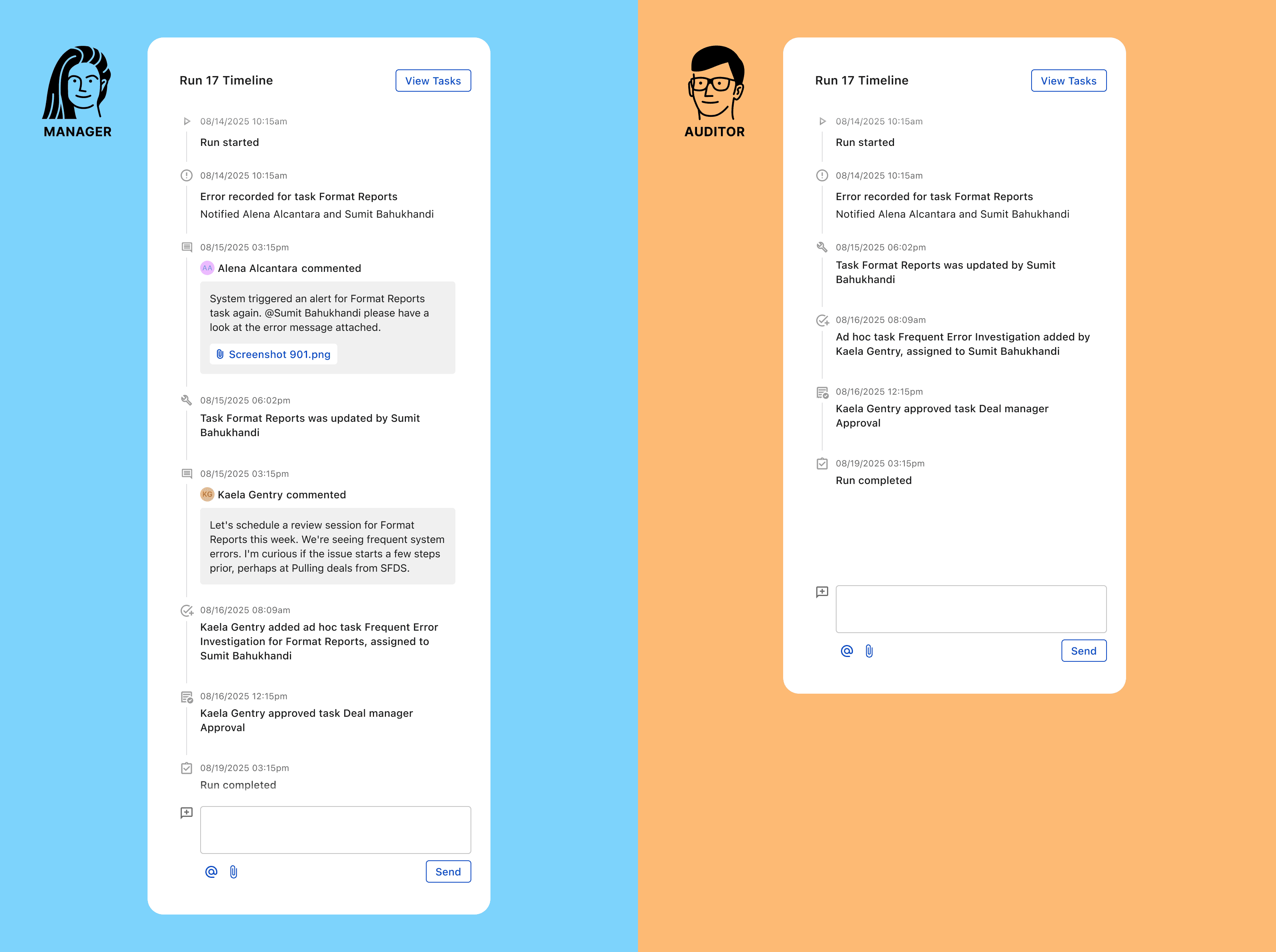
The trust layer in detail. When users can see what the system did, they begin to depend on it.
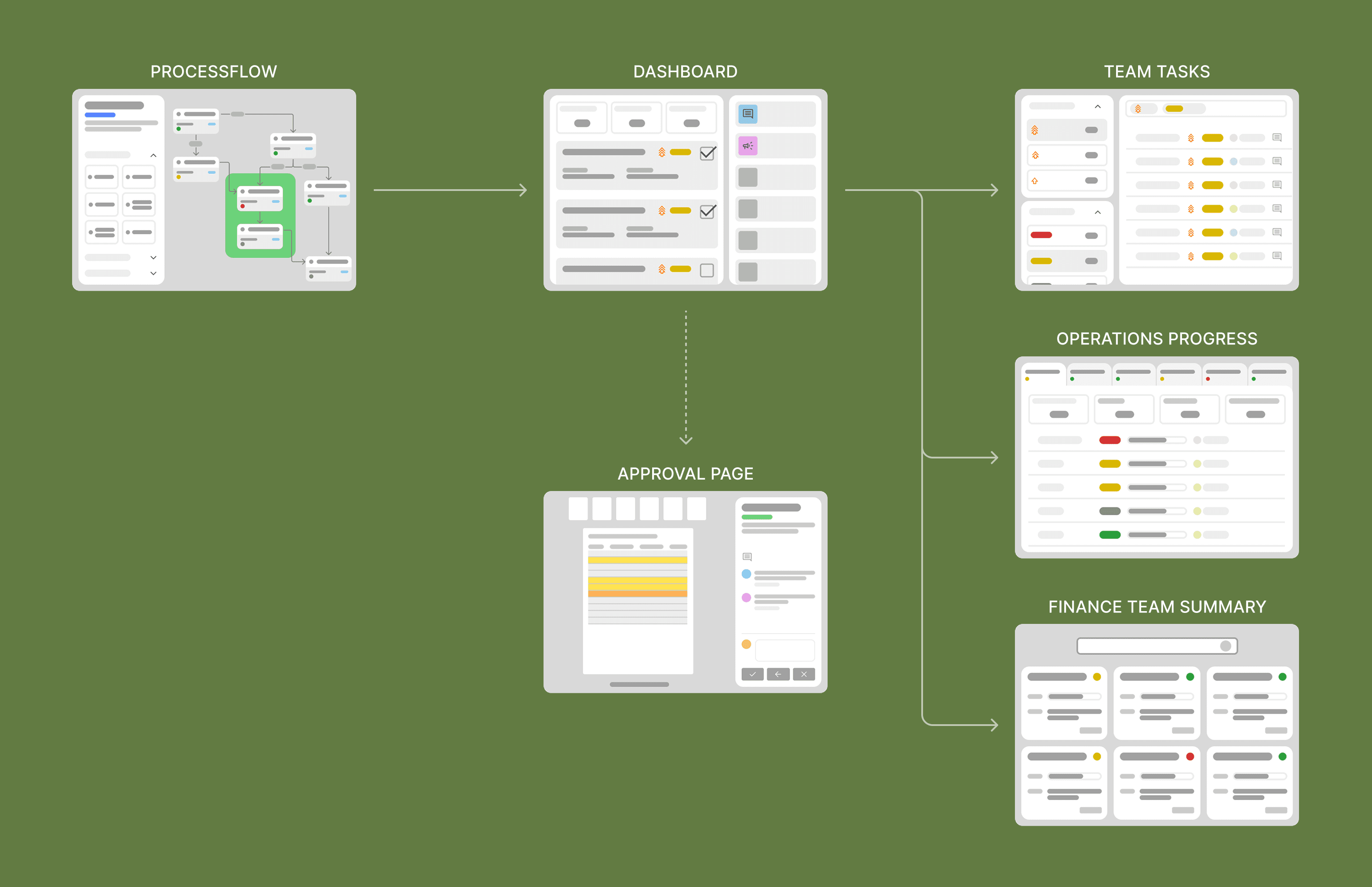
Connective tissue. One interaction model for depth.
Outcome
Financial Operations Workbench was well received by both users and the internal design team. We proposed a new way of working more closely with our design partners and an AI-first design approach.
Reflection
Going in, the learning curve was steep. I had to learn many finance concepts and terms, understand the role-based personas involved, and work from an ambiguous brief.
The research phase, in particular, clarified our product vision and helped us create an intuitive, efficient design and an AI-agent-friendly infrastructure.
Going forward, we will iterate on training agents on reasoning patterns, using logged data from Timeline, and continue building trust so users collaborate even more closely with agents in their day-to-day work.